NHF Digital Edition

Get our FREE digital edition! Subscribe here.

Setting Pigs Up to Succeed

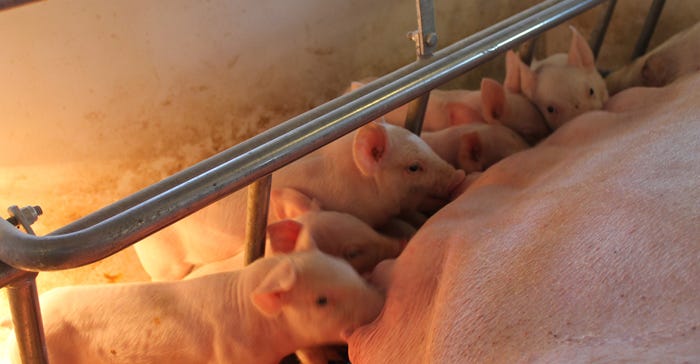
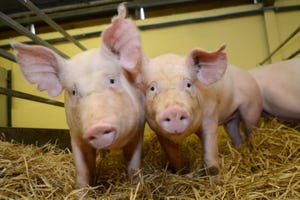
Investing in the first day of a pig's life can make a pivotal difference in its lifetime performance.

Previous Page: Goal Three: Runt Pig Litters

Pig Processing

“Research disagrees on the best time to process pigs, but I typically recommend that Day 0 or Day 1 be a time that pigs are left undisturbed.

“When we do process, there are things that occur that have the potential to create disease, which can increase variation if we are not careful,” Miller cautions. Disinfect tools between litter treatments. Change needles frequently.

Giving iron shots is one of the most important newborn pig treatments. Studies show piglets need at least 200 mg. of iron in the first three days of life. “You skip giving a pig iron and you have created a pig that is going to be smaller throughout the rest of its life,” she declares.

To prevent iron leakback, which could cause the pig to be iron deficient, try this technique: stretch the pig's neck a little, give the iron shot in the neck and release the neck as you pull the needle out. “When you release the skin, the hole in the skin and the hole in the muscle from the iron shot don't quite line up, creating a cap over the hole where the iron went in, thus holding the iron in,” Miller says.

Use a sharp blade for castration. To repair scrotal ruptures, consider a nonsurgical taping method that has a very high rate of success. The method was featured in National Hog Farmer (“Less Invasive Rupture Repair,” Jan. 15, 2006, pages 20, 21).

Whether it is spotting a pig with iron leakback or a pale pig, intervention must be timely. “We need to look at every litter, every day, and if there is a pig that needs to be treated, treat it and treat it appropriately,” she says.

Farm Fallout Problems

One of the biggest problems is that farm staff wait to pull fallouts until 10-12 days of age, not giving them much opportunity to recover.

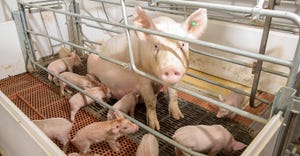
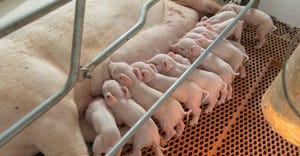
At 3-7 days of age, find and pull these pigs and place them on a nurse sow, and they should have a good chance of recovery. Miller says a good technique is to move a good-milking, weaned sow back to an empty farrowing crate to become a nurse sow.

She adds: “We know that our gilts do better on their subsequent litter if they are nursed longer, so this is one area where we may actually use gilts as nurse sows.

“We like bumping the sows down (back into farrowing) better than bumping litters up (weaning pigs early), because bumping litters out can create variation in your finisher barn because those pigs didn't get to nurse as long as other litters,” Miller notes. Every day pigs are weaned later than Day 14 up to Day 22 is worth 89 cents to $1.50/pig in additional profit, she adds.

Want to use this article? Click here for options!
© 2009 Penton Media Inc.


Most Recent Story


Most Recent Articles


National Hog Farmer TV

Resources

  • Industry Resources
  • Calendar
  • Blueprint Issues
  • Career Opportunities
  • Pork Checkoff
  • Quarterly/Weekly Hog and Pig Reports
  • Product Info
  • People
  • Production Posters
  • Green Agriculture
  • State of the Pork Industry Report
  • New Product Tour

Current Issue

New Rules for Risk Management

Risk management, it seems, has always been viewed favorably by pork producers. Problem is, it's rarely practiced to any great degree. ...

Current Issue

"Swine Flu" - It's Time to Move On

Something bad has happened to you. It wasn't deserved and it wasn't fair. The people who did it are callous and heartless (at least in regard to you), and lazy, or they would not have done it. But they did it. It's over. It's done. You can whine and wallow in self-pity and martyrdom or pick yourself up, dust yourself off and get on with life and the business of raising quality pork. ...

Marketplace Ads

  • VAL-CO

    Swine Heat Stress. Start thinking about your summer cooling options.

  • Advertise in our Marketplace

    Advertise your business here! Find out how.

  • U.S. Crop and Livestock Maps for sale

    Ag Maps for Sale: U.S. Crop and Livestock Maps

Back Issues Archive