North American Preview

National Hog Farmer Newsletter
Provides pork producers in the United States and Canada with weekly analysis of items that will impact their business. Subscribe

Adding Glycerol Improves Pelleting, Provides Nursery Growth Alternative

A Kansas State University (KSU) research team recently investigated whether glycerol, a byproduct of the biofuels industry, could decrease diet cost by replacing corn as an energy source. They also looked at whether adding glycerol to a corn-soybean meal diet prior to pelleting could help reduce wear and tear on pelleting machines.

Crude glycerol is the primary co-product of the biodiesel production process. If U.S. biodiesel production facilities continue to multiply as predicted, biodiesel production capacity will soon exceed 2.5 billion gal. This level of production will yield nearly 1.3 million tons of glycerol.

Part of the glycerol is currently processed into an industrial chemical. However, the industrial glycerol market is already saturated. Interest has been growing in utilizing crude glycerol as a livestock feed ingredient to reduce diet costs. But little has been known about glycerol's nutritional value, or how it might impact feed quality and feed processing efficiency.

A series of KSU experiments looked at the effect glycerol might have on pellet mill production efficiency.

Three experimental diets were manufactured and pelleted, and data was collected at the KSU Grain Science Feedmill. All of the diets were steam- conditioned and pelleted at specific temperatures, using a pellet mill equipped with a 4 × 32 mm pellet die.

The six treatments in the first experiment were made up of a corn-soybean meal-based swine grower diet, formulated to contain 0, 3, 6, 9, 12 and 15% crude glycerol.

Experiment two included seven treatments: a control diet with no added soy oil or glycerol; the control diet with 3% or 6% added soy oil; the control diet with 3% or 6% added glycerol; or the control diet with 6% or 12% of a 50:50 soy oil-to-glycerol blend. Experiment three included five treatments: a control with no added lactose or glycerol; the control diet with 3.6 or 7.2% lactose; or 3.6 or 7.2% glycerol.

Each experimental diet was replicated by manufacturing a new batch of feed three times. Pellet mill electrical consumption, production rate, hot pellet temperature, motor load, feeder rate, conditioning rate and pellet durability were measured.

The researchers concluded the glycerol improved pellet quality in all three experiments. The addition of glycerol should increase the production efficiency of the pelleting process and decrease energy cost for the pellet mill. The data indicate glycerol can be added to a diet with soy oil in a blend to improve pellet production efficiency and pellet quality, compared to a diet containing only soy oil. Specific information about how each dietary formulation performed during the pelleting process is contained in Tables 1, 2 and 3.

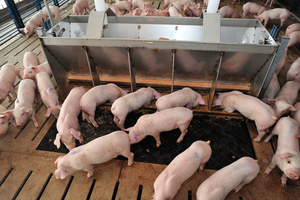
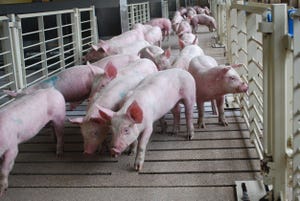
Using the diets from the second experiment, the researchers also evaluated the effects of glycerol, soy oil and a 50:50 soy oil/glycerol blend on nursery pig performance.

The seven dietary treatments were corn-soybean meal-based control diet with no added soy oil or glycerol; the control diet with 3% or 6% added soy oil; 3% or 6% added glycerol; and 6% or 12% additions of a 50:50 soy oil/glycerol blend.

Want to use this article? Click here for options!
© 2008 Penton Media Inc.

Most Recent Story


Latest Jobs


National Hog Farmer TV

Resources

  • Industry Resources
  • Calendar
  • Blueprint Issues
  • Career Opportunities
  • Pork Checkoff
  • Quarterly/Weekly Hog and Pig Reports
  • Product Info
  • People
  • Gilt Selection Posters
  • Green Agriculture
  • State of the Pork Industry Report

Recent News

Special Report from the 39th Swine Veterinarians Meeting

The American Association of Swine Veterinarians (AASV) held its 39th annual meeting in San Diego, CA, in early March. Following are some of the activities which took place...

Processing Downers Could Bring Fine, Plant Shutdown

Three senators have co-sponsored legislation that would fine and close livestock slaughter plants that repeatedly process downed animals...

Marketplace Ads

  • VAL-CO

    Swine Heat Stress. Start thinking about your summer cooling options.

  • Advertise in our Marketplace

    Advertise your business here! Find out how.

  • U.S. Crop and Livestock Maps for sale

    Ag Maps for Sale: U.S. Crop and Livestock Maps

Back Issues Archive