NHF Digital Edition

Get our FREE digital edition! Subscribe here.

China Suspends Some U.S. Pork Imports

In response to concerns over trace levels of ractopamine found in U.S. pork shipments, China has delisted 11 plants.

Ractopamine (Paylean from Elanco Animal Health) is used as a feed additive to promote lean growth in pigs, and has been approved for use in 24 countries. Ractopamine produces dramatic muscle growth, but is not a steroid or hormone, but rather a beta agonist. The U.S. Food and Drug Administration approved its use in 1999.

The following pork plants are currently barred from exporting to China:

  • Swift Pork Co., Worthington, MN;
  • John Morrell & Co., Sioux Falls, SD;
  • Cargill Meat Solutions, Beardstown, IL and Ottumwa, IA;
  • Tyson Fresh Meats, Waterloo, IA;
  • Farmland Foods, Denison, IA, Crete, NE and Monmouth, IL;
  • Hatfield Quality Meats, Hatfield, PA;
  • Indiana Packers Corp., Delphi, IN; and
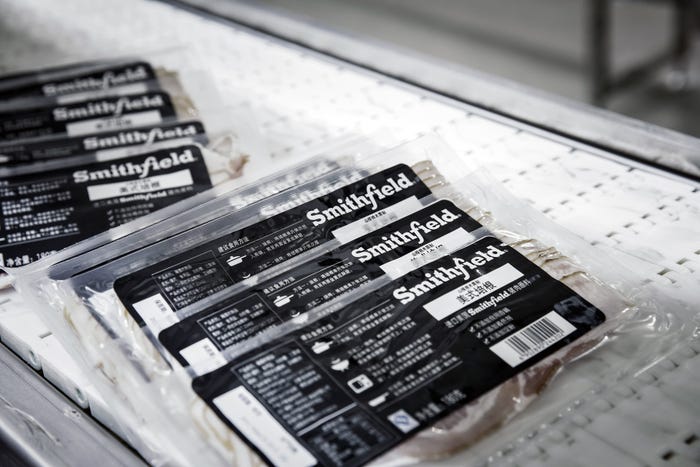
  • Smithfield Packing Co., Tar Heel, NC.

Most of the suspensions took place in August; two of the plants have been suspended since 2005.

There are seven other plants under 45-day warnings, meaning they can still export product but must go 45 days without incident or also be suspended, according to USDA.

The American Meat Institute (AMI) said China’s suspension of U.S. plants from exporting safe, inspected U.S. pork products is not based upon sound science.

“Products produced by the plants suspended by China were inspected and passed as wholesome by U.S. Department of Agriculture inspectors,” says AMI President J. Patrick Boyle. “U.S. food safety standards are among the most stringent in the world and our pork products are recognized for their safety. These products could be sold in the United States and consumed safely by American consumers, yet China rejected them.”

Nick Giordano, international trade counsel for the National Pork Producers Council (NPPC), agrees with that assessment. “This is not a food safety issue. This is a political issue. It is protectionist and we are not going to stand for it,” he stresses.

The Chinese have been under the microscope for a variety of food safety and product safety issues and this is their way of retaliating, Giordano points out.

As an advocate for the pork industry, NPPC will be “pulling out all the stops to get all of the U.S. pork plants relisted and to get the Chinese to establish an import maximum residue level for ractopamine,” he notes.

According to the AMI, in a paper presented in the Journal of Agriculture and Food Chemistry, Chinese scientists have concluded that ractopamine is safe to use in swine. “AMI is asking the U.S. government to engage the Chinese in a dialogue to establish a scientifically-based, acceptable level of ractopamine,” Boyle says.

From 2005 to 2006, U.S. exports of pork and pork products to China increased 13% in volume, totaling 97,283 tons, valued at $126 million. “U.S. pork exports have exploded because of the increased access resulting from China’s accession to the World Trade Organization (WTO),” says Elizabeth Watson, international trade research specialist for the NPPC. “Since China implemented its WTO commitments on pork in December 2001, U.S. pork exports have increased 53% in volume and 90% in value.”

Read more news from National Hog Farmer>

Want to use this article? Click here for options!
© 2009 Penton Media Inc.


Most Recent Story


Most Recent Articles


National Hog Farmer TV

Resources

  • Industry Resources
  • Calendar
  • Blueprint Issues
  • Career Opportunities
  • Pork Checkoff
  • Quarterly/Weekly Hog and Pig Reports
  • Product Info
  • People
  • Production Posters
  • Green Agriculture
  • State of the Pork Industry Report
  • New Product Tour

Current Issue

Costs, Price Pressures Ease Just a Little

There was a lot to be positive about in the pork industry the last week of October. I realize it is difficult to be optimistic when you are still losing $25 to $30/head. I also realize that positive news at this point could be as dangerous as it is welcome. But facts are facts, and we must recognize them. ...

Current Issue

The "Good" and "Bad" Sides of a Cheaper Dollar

As I begin this week's column, I"m reminded of two different "flip side" statements that may help characterize the topic at hand. The first is the old Archie Campbell schtick - "That's good - no that’s bad," which I have used before. The second reflects President Truman's frustration with economists' incessant use of the qualifier - "on the other hand" - to introduce the contrary opinion on a given topic. President Truman once demanded in his usual colorful language: "Will someone please find me a *!&%$*?>

Marketplace Ads

  • VAL-CO

    Swine Heat Stress. Start thinking about your summer cooling options.

  • Advertise in our Marketplace

    Advertise your business here! Find out how.

  • U.S. Crop and Livestock Maps for sale

    Ag Maps for Sale: U.S. Crop and Livestock Maps

Back Issues Archive