Vaccines Improve Performance
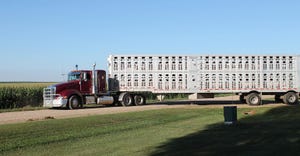
Prior to his academic role, Baker worked with a large integrator that had one of the best biosecurity systems of any commercial farm in the United States. While there, he helped develop the Trailer Baker, which dries trailers for 10 minutes at 165-180° F.
“We validated that we could easily kill TGE (transmissible gastroenteritis) virus, PRRS virus, most of the salmonellas and E. coli by heating these trailers in an insulated bay.
“But recent research indicates that you are not going to completely destroy PCV2 virus by heating trailers to 248° F for 30 minutes with dry heat. This would be impractical because of cost and damage to both trailers and tractors. It appears that we would only get a small reduction in the amount of the virus even at these temperatures,” he says. Circovirus managed to slip through the trailer heating and all the biosecurity measures at this integrator.
“So our trailer dryers are not effective in preventing transmission of this virus. Steam heating at 110-120° F does a lot better job, but even 30 minutes of wet heat probably won't kill all virus left behind in our trailers,” Baker says.
There are several disinfectants that do a good job destroying the virus, but “the problem is you just can't disinfect everything on a pig hauling trailer,” he says.
Circovirus is a very hardy virus, which is “ubiquitous or everywhere in pig populations. I suspect it can easily be tracked around the world,” Baker says. The virus is likely spread through fecal-oral contact and contaminated fomites. Airborne transmission doesn't appear to be a likely means of spread.
To prevent new diseases from periodically spreading through the swine industry, biosecurity systems will need to be overhauled, he suggests.
Baker says ISU has diagnosed more than 1,000 field cases of PCVAD in their Veterinary Diagnostic Laboratory at Ames so far this year. In a subset study of 454 cases during 2006, only nine were PCV2 alone. A third of the cases were PCV2 and PRRS virus; 92 were PCV2, swine influenza virus (SIV) and mycoplasma; 77 were PCV2, PRRS and SIV, and 68 were PCV2 and mycoplasma.
In a recent on-farm survey of 60 U.S. herds, conducted by BIVI and ISU, 72% of the PCVAD cases also had coexisting PRRS. Salmonella was found as a co-factor in 58% of the cases. SIV and mycoplasma were identified as concurrent infections with PCVAD in 30% and 18% of the cases, respectively.
The results are based on findings from the MAGIC (Monitoring Assignment for Global Insight of Circovirus) diagnostic trials that were conducted by BIVI in 2006 in an effort to improve understanding of PCVAD and the role of co-infections.
The MAGIC project includes herd history, mortality rates, PCVAD symptoms and individual animal diagnostics. All samples were evaluated by ISU's diagnostic lab.
Those studies revealed that co-infections usually produced higher levels of disease and lesions than with PCVAD infection alone.
An ISU study also showed that PCV2-infected pigs that were vaccinated for PRRS had significantly increased average daily gain and fewer lung lesions over non-PRRS vaccinated, PCV2-infected pigs.
“The research shows just how important it is to control PCV2, PRRS, salmonella and other diseases as a way to reduce or mitigate the severity of PCVAD where it's a problem,” says John Kolb, DVM, BIVI. “Especially in regards to PRRS, the combination of PRRS and PCV2 can be most devastating to a production system.” More information is at www.bi-vetmedica.com or 800-325-9167.
Fort Dodge Animal Health (FDAH) announced at World Pork Expo that it is pursuing two efforts to expand the knowledge base about circovirus, according to Craig Wallace, vice president of marketing for FDAH.
In July, the company is launching a Web site called www.stopcirco.com to serve as a technical reference source. “We want it to be the place where people can go for the latest information about circovirus,” he says. It will link to a company site called Swine Health Solutions.
FDAH has also started a Risk Assessment database. The eventual goal is to have universities, veterinarians and producers providing information into the database to pinpoint the factors that most commonly lead to circovirus outbreaks.
“We believe that this will help us do a better job of managing this disease and use techniques for prevention,” he explains.
Learn more by calling 800-685-5656 or logging onto the circovirus Web site.
Intervet's conditionally licensed vaccine showed effectiveness in reducing mortality and clinical signs from porcine circovirus-associated disease (PCVAD).
Rich Schlueter, DVM, Intervet Swine Technical Services, reported results on Porcine Circovirus Type 2 during a World Pork Expo educational seminar. The killed-virus, two-dose vaccine is approved for use in pigs 3 weeks of age and older.
In company-conducted laboratory studies, nasal shedding and fecal shedding were both eliminated in pigs vaccinated and then challenged with the virus compared to controls, which readily shed the virus over the 42-day observation period.
In one field study conducted in multiple barns, overall mortality from PCVAD was reduced from 15.2% for nonvaccinates to 5.5% for vaccinates.
In three other field evaluations:
-
Field evaluation No. 1 — 1,149 vaccinated pigs were placed on test vs. 1,229 nonvaccinates. Pigs were fed to a market weight average of 289 lb. for vaccinates vs. 274 lb. for nonvaccinates, returning $22.90/head for vaccinates vs. $10.46 for nonvaccinates, based on a live market price of $47.70/cwt. Death loss was dramatically different — 2% for vaccinates vs. 14.4% for nonvaccinates.
-
Field evaluation No. 2 — 1,252 head were vaccinated vs. 1,224 head unvaccinated. About 5.10% of vaccinated pigs died vs. 8.74% of nonvaccinated pigs. In addition, the cull rate for vaccinates vs. nonvaccinates was 0.24% vs. 9.07%, respectively.
-
Field evaluation No. 3 — Pigs were vaccinated five weeks after being moved into a finisher, next to a group of nonvaccinates. Some 1.1% of vaccinates were culled, compared to 7.5% of nonvaccinates. Final mortality was 3.2% for vaccinates vs. 12.4% for nonvaccinates.
Schlueter also provided results from a Canadian field study involving PCVAD-infected herds in Quebec and Ontario. Collectively, the herds had mortality rates of 10.45%. When immunized with the Intervet vaccine, mortality dropped to 2.76%.
Schlueter says Intervet's PCV2 vaccine “has been highly effective in reducing mortality in severely affected herds.”
He recommends vaccinating pigs early (3 weeks of age, per label directions) to provide optimum protection before the disease takes hold. Vaccination interference from maternal passive antibodies apparently is not an issue with early vaccination.
Consider other strategies if pigs are infected at a young age.
Want to use this article? Click here for options!
© 2009 Penton Media Inc.