NHF Digital Edition

Get our FREE digital edition! Subscribe here.

It's the Pits!

It also helps determine the impact of direct-fed microbials on manure nutrient content. MicroSource S (DSM Nutritional Products) is blended into all grow-finish diets at The Maschhoffs, according to Aaron Gaines, company director of Nutrition and Production. The product is used for odor control, reduction in manure solids and improved pig performance (feed efficiency).

Laatsch says DSM also has a direct-added pit product that The Maschhoffs are testing on new farm setups. “It takes a while to get that microbial population established in the pit, and we try to give it a little jumpstart with some good organisms to reduce odors.”

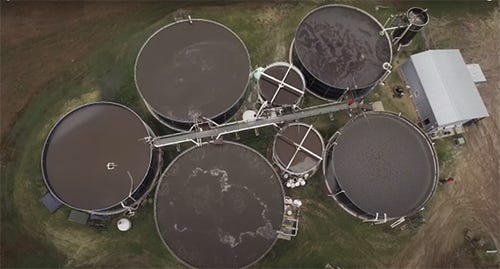
As manure samples are taken, an evaluation is also made of pit surface crusting, volatile solids and the depth of solids that can be remedied with pit agitation, pit treatment products and other strategies.

“Pit sampling enables us to keep a little better finger on the pulse of how the pits are performing, if farms need help and how to target resources better,” he says.

Discovery Farm Update

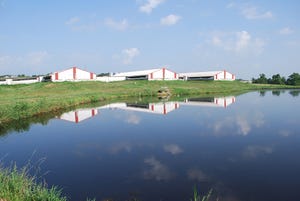
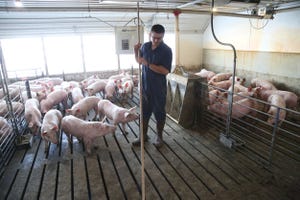
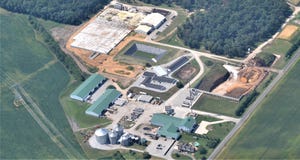
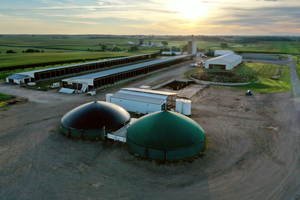
The Maschhoffs own a nine-barn, tunnel-ventilated, deep-pitted, wean-to-finish system near McLean, IL, that is being used for air quality research by the University of Illinois.

Laatsch provides preliminary results on three technologies that were tested in a two-year study just completed at the McLean farm.

One product involved a three-phase, automated pit control system designed to control pit and pig odors. A series of pH probes measure pH levels in the manure, and a controller meters a neutralizing agent into the pit to raise the pH level as needed to reduce odor. A second component is an “oil lid” that is applied to the surface of the manure pit to serve as an organic seal. Material is allowed to drop through, but the oil lid minimizes the exchange of gases from the pit. A third component is an atomizer system that periodically sprays an acid-based oil product onto the pigs and slats to suppress dust and ammonia volatilization. The claim is improved air quality and performance. Laatsch says there was no statistically significant difference in performance between the control and treated groups for the whole system. The three-phase product costs $4.19/pig marketed.

In the study, there were two treated and two control barns that were monitored around the clock for various gases. In fact, levels of hydrogen sulfide actually increased in the treated barns, which may have been due to sulfur content in the oil, he surmises. The good news is that dust was reduced by about 30%, he notes.

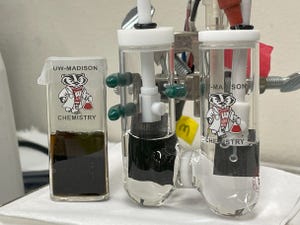
A second technology tested involved a pump and treat system. Manure is pumped out of the barn and run through an electrolysis unit that applies electrical current to the manure. Obviously, there are substantial electricity costs to this system, Laatsch relates, and there was no noticeable impact on pig performance or reduction in ammonia or hydrogen sulfide gases.

But there was about a 25% reduction in odor, which the company suggests is due to the electrolysis process breaking down the volatile fatty acids in bacteria, the main components of odor.

A third system only dealt with dust particulate matter. A shroud is placed over the outside of ventilation fans, comprised of a geotextile-type material fitted over an aluminum frame. Exhausted air is forced up and away from the barn. That pocket of circulated air electrostatically charges exhausted dust particles, causing them to drop and stick to the ground, Laatsch explains. Problems include piles of dust accumulating on the shroud or curtain and ground.

Also, since the curtain is not waterproof, rainfall could result in suspension and transportation of dust particulates, potentially leading to water quality issues, Laatsch says.

In the next 18 months of study at the McLean farm, the focus will include management strategies for dust reduction, such as wet-dry feeders and fat in the diet, and evaluating those approaches in a production setting, he says.

Other efforts will review the dust reduction capabilities of the three main technologies studied.

Two filtration technologies will also be studied at the McLean farm, reports Laatsch. University of Illinois scientists are investigating new design configurations for the biofilter to overcome some inherent problems.

Under consideration is an enclosed-type design to preclude rodent access to the media and to incorporate an automated moisture control system to provide better moisture retention than conventional designs.

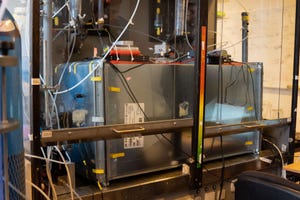
Laatsch is particularly interested in a high-tech biofilter manufactured by the Skov Company of Denmark. It uses a multi-stage boxed media filtering system that the company claims treats and significantly reduces emissions of ammonia and particulate matter.

More Articles on Manure Management Technologies:

Want to use this article? Click here for options!
© 2009 Penton Media Inc.


Most Recent Story


Most Recent Articles


National Hog Farmer TV

Resources

  • Industry Resources
  • Calendar
  • Blueprint Issues
  • Career Opportunities
  • Pork Checkoff
  • Quarterly/Weekly Hog and Pig Reports
  • Product Info
  • People
  • Production Posters
  • Green Agriculture
  • State of the Pork Industry Report
  • New Product Tour

Current Issue

New Rules for Risk Management

Risk management, it seems, has always been viewed favorably by pork producers. Problem is, it's rarely practiced to any great degree. ...

Current Issue

"Swine Flu" - It's Time to Move On

Something bad has happened to you. It wasn't deserved and it wasn't fair. The people who did it are callous and heartless (at least in regard to you), and lazy, or they would not have done it. But they did it. It's over. It's done. You can whine and wallow in self-pity and martyrdom or pick yourself up, dust yourself off and get on with life and the business of raising quality pork. ...

Marketplace Ads

  • VAL-CO

    Swine Heat Stress. Start thinking about your summer cooling options.

  • Advertise in our Marketplace

    Advertise your business here! Find out how.

  • U.S. Crop and Livestock Maps for sale

    Ag Maps for Sale: U.S. Crop and Livestock Maps

Back Issues Archive