NHF Digital Edition

Get our FREE digital edition! Subscribe here.


      Share

The Quality Challenge

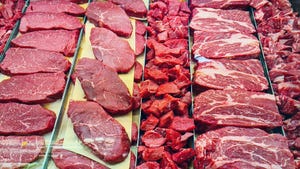
Is U.S. pork facing a meat quality crisis? In the last three months, I have seen several references speculating that today's pork may be “too white and too lean.”

An October 27th Wall Street Journal article headlined: “Where's the Fat? Lean Pork May Be Reason for Weak Sales.” The article pointed out that record-high beef prices provided only “modest support for wholesale pork prices.” Consequentially, the article says, many in the U.S. pork industry are questioning whether other factors are causing pork sales to sag. The article points to eating quality and flavor as possible causes for pork's lackluster sales.

Author of the article, Curt Thacker with OsterDowJones Commodity News, polled various segments of the industry, and came to this conclusion: “…efforts over the past 15-plus years to take fat off the hogs have resulted in animals that are too lean, and that pork now doesn't have as good a flavor as it once did.”

Ouch!

In mid-November, I attended the rollout of the new “Benchmarking Value in the Pork Supply Chain” report that surveyed production, packer/purveyor and retail/consumer attitudes about pork quality (see article on page 30). The 50-plus page final report serves as a follow-up to a similar study conducted in 1992. The survey represented about two-thirds of the hogs marketed in 2002.

The extensive database on average carcass composition notes that average backfat was trimmed 36%, from 1.07 in. to 0.69 in., in the 10-year span. In addition, the average market hog now boasts 55.5% lean muscle, up from 49.5% recorded in '92, even though the average live weight was 10 lb. heavier.

Compositionally, those are impressive shifts. But, we must ask ourselves — have these changes been good or bad for the pork eating experience?

It was very unsettling to see PSE (pale, soft, exudative) pork had increased over 50% — climbing from 10.2% of the pork in '92 to 15.5% in 2002. Packers/purveyors implicated weather as the leading contributor to PSE occurrence, but that doesn't alter the fact that the quality of over 15% of pork is unacceptable. That's way too much in my book.

And, heavier carcasses yield heavier hams and loins. When compared to 1992 data, both hams and loins averaged 3-4 lb. heavier. Hams averaged 26 lb., loins, 21 lb. The heavier weights are another growing concern in the retail market.

Attention to Genetics

In early November, a pork producer closely tied to one of the nation's largest integrators related a growing concern about the meat quality from genetic lines currently in service. A major shift in the integrator's breeding program was launched to incorporate sire lines with known meat quality attributes.

In December, the National Swine Registry (NSR) announced a new initiative to help purebred breeders identify superior genetic lines for muscle quality traits such as 24-hour pH, pork color and marbling. The goal is to build on the database of pork quality measurements collected from the cooperative meat quality tests conducted by the National Pork Board, the National Barrow Show, several universities and the private seedstock sector. These pork quality measurements were included in the Registry's STAGES (Swine Testing And Genetic Evaluation System) program. Expected Progeny Differences (EPDs) will be calculated and used to rank sires for meat quality traits. The EPD, an estimate of genetic transmitting ability, projects the contribution a sire or dam is expected to make to the genotypic value of their offspring.

Commercial breeding stock companies are also increasingly focused on meat quality indicators to guide selection in their nucleus herds.

Measuring Marbling Live

Iowa State University (ISU) researchers are studying the feasibility and accuracy of measuring intramuscular fat percentage in live animals. The fascinating part of the ISU work is the use of “texture analysis” software to measure intrasmuscular fat in live animals. If that technology can be applied to the next generation of sires, animals could be screened for pork quality traits before they enter the gene pool. Of course, intramuscular fat is only one measure of meat quality. And, the heritability of meat quality traits must be weighed against other production parameters.

Another ISU study is comparing the offspring from current Duroc sires to 1980 vintage sires (produced from frozen semen), in an effort to determine whether selection for leaner carcasses has had a negative impact on meat quality.

Although the differences in loin size, backfat depth and intramuscular fat were not “significantly different” in scientific terms, the current sire lines did produce market hogs with slightly less backfat and larger loin eyes, while the old-line boars sired pigs with slightly more intramuscular fat.

Now that Pandora's box about pork quality has been opened, these pork quality issues need our undivided attention. To ignore them will only drive consumers to explore other meat protein options.

Want to use this article? Click here for options!
© 2010 Penton Media Inc.


Most Recent Story

Most Recent Articles


National Hog Farmer TV

Interact With Us

National Hog Farmer on Facebook National Hog Farmer on Twitter

Resources

  • New Product Tour
  • Calendar
  • Blueprint Issues
  • Career Opportunities
  • Pork Checkoff
  • Quarterly/Weekly Hog and Pig Reports
  • Product Info
  • People
  • Production Posters
  • Green Agriculture
  • State of the Pork Industry Report
  • Industry Resources

Current Issue

MARKET PREVIEW by Steve Meyer

Cutout Values Keep on Breaking Records

Another week, another record-high cutout value seems like no big deal. That's the way it goes in this wonderful pork industry. Right?...

SWINE HEALTH PREVIEW PREVIEW

Actinobacillus suis Activity Persists

A little over two years ago, we commented on a general rise in the frequency of Actinobacillus suis (A. suis) isolation from our swine tissue submission cases, and wondered if it was related to the increased porcine circovirus type 2 (PCV2) activity (National Hog Farmer North American Preview, June 6, 2008)...

Legislative Preview

Mexico Adds Tariffs to U.S. Pork Over Truck Access Issue

The Mexican government has added pork to the list of U.S. products against which it is retaliating for the failure of the United States to live up to its obligations under the North American Free Trade Agreement (NAFTA) to let Mexican trucks haul goods into the United States...

Marketplace Ads

  • VAL-CO

    Swine Heat Stress. Start thinking about your summer cooling options.

  • Advertise in our Marketplace

    Advertise your business here! Find out how.

  • U.S. Crop and Livestock Maps for sale

    Ag Maps for Sale: U.S. Crop and Livestock Maps

Back Issues Archive