NHF Digital Edition

Get our FREE digital edition! Subscribe here.

The Masters

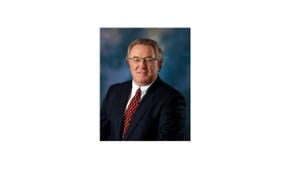
Temple Grandin

Speaker, author and animal scientist gives voice to animals.

Through her work, Temple Grandin has tried to improve the lives of farm animals by designing welfare-friendly livestock handling systems on the farm and at meat plants in several countries and across North America.

The handling systems embody Grandin's unique gift of autism, which enables her to visualize and empathize with flight and fear principles she shares in part with the animal kingdom.

Instead of thinking in words, her world as an autistic person revolves around pictures, and her mind files and categorizes every thought as visual images, much like a film library.

“My mind works just like Google for images. I don't think in the abstract at all,” she explains. “Everything in my life is organized visually.”

Exposure to Agriculture

Growing up in Dedham, MA, outside Boston, she yearned to become an experimental psychologist because of her fascination with visual illusions, fueled by a film she saw in high school that dealt with spatial distortions.

But Grandin's first real taste of agriculture, when she visited a ranch in Arizona owned by her stepfather's sister, changed all that. Then, all the teenager wanted to talk about was livestock handling.

“The visual perception thing carried over into my later work with animals, because pigs and cattle balk at shadows on the ground and reflections, and it all seemed so obvious to me,” she says. “Right at the beginning, I can remember back in the '70s, when I first started working with cattle, I got down into the chute to see what the animals were seeing, and people thought I was crazy doing that.”

In those days, Grandin was working on her master's degree in animal science at Arizona State University (she graduated in 1975), and writing a livestock column for the Arizona Farmer and Rancher magazine, without the benefit of any formal training in journalism.

She launched Grandin Livestock Handling Systems, Inc. in 1980, completed her PhD in animal science from the University of Illinois in 1989, and later joined the faculty at Colorado State University (CSU). Today she teaches courses on livestock behavior and livestock facility design.

Successful Career

She is considered one of the most successful high-level functioning adults with autism. Her career in agriculture bears that out. In North America, almost half of the cattle are handled in a center track restrainer system that she designed for meat plants. Curved chute and race systems she designed for cattle are used worldwide. Her writings on the flight zone and other principles of grazing animal behavior have helped many people to reduce the stress on their animals during handling.

Grandin has also developed an objective scoring system to assess handling of cattle and pigs at meat plants. Many major corporations use this scoring system to improve animal welfare. She has also developed effective stunning methods for cattle and pigs at meat plants.

Her numerous videos and training tools have illustrated how to correct issues at a meat plant, like reflections from dripping water, seeing people through a space in equipment or shadows near a chute entrance, which can all cause animals to balk. “Not until you can find and correct all of these types of things can you put away the electric prods and improve animal welfare,” she stresses.

In 1999, Grandin organized and began conducting animal welfare audits of slaughter plants for McDonald's and Wendy's restaurants, among other clients.

“One of the biggest mistakes suppliers make is thinking they've found a new piece of technology that is instantly going to make the place wonderful. New technology definitely makes your work easier — but it doesn't replace good management,” Grandin points out. The staff must make the equipment compatible to achieve animal safety and proper animal welfare, she adds.

While most large meat plants are now doing a sterling job, she says three years ago when the organic market emerged, and she began working with plants supplying Whole Foods stores, many small plants were taken off their list of suppliers because of management issues.

Grandin is most proud of the American Meat Institute animal welfare auditing programs she developed, because for the first time in history, meat plants began to monitor how many cattle and pigs got an electric prod, how many animals fell down, the number of animal vocalizations and how many animals were improperly stunned.

One of Grandin's pet peeves regarding animal welfare is “when bad becomes normal,” whether it be at the plant or on the farm. With her input, major food corporations for which she consults have ramped up their animal welfare auditing programs and removed poor performers, she notes.

Animal Welfare Concerns

Grandin, professor of animal science at CSU, strongly defends her views opposing sow stalls in gestation.

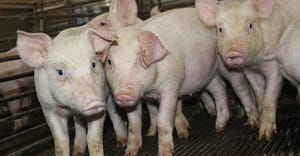
“I think we need to get rid of sow stalls,” she says. She likens living in a sow stall to having to live on an airplane seat where you can't turn around. She conducted an unofficial survey several years ago on an airplane flight, asking what folks thought of gestation stalls. Most were opposed to their use, although they understood the need for farrowing crates.

Before stalls can be eliminated from use in gestation, however, Grandin emphasizes the swine industry must take strong steps to eliminate mean sows and embark on a program of producing gentler sows that can coexist in group housing.

“We have gone 20 years without formal culling pressure to get rid of sows that fight and are nasty,” she explains. “We have to get rid of these sows instantly because they teach other sows that kind of behavior.”

What she terms “crazy pigs” — the overly aggressive white-line grow-finish pigs — need to be removed from the industry because they perpetrate the mantra of “bad becoming normal.”

The industry needs to set a new direction of breeding gentler pigs that are easier to manage, easier to load at the farm and unload at the plant, she explains.

Balancing Biology

Grandin suggests the constant push to maximize livestock productivity has caused biology to lose its balance.

“An animal is like a country — you've got the military and the economy,” Grandin says. “The military is the immune system. Put everything into the economy (production) and you've got to take away from the military, leaving the military open to infection or invasion from pathogens. People say bioengineering can build a pig strong in immunity and production. But it takes energy to support those things. Push biological limits too far and you lose disease resistance.”

Grandin also reports she was one of the earliest advocates of the value of walking pens as a means of improving animal handling during load-out and at the slaughter plant.

Some 10-20 years hence, she foresees a different swine industry, made up of two basic camps. An organic-natural segment will make up 25% of the industry comprised of many different niches, while 75% will be a standard commercial industry.

Grandin, who will be 60 years old next summer (2008), still maintains a daunting travel schedule, and is on the road about 90% of the time. She has reduced international travel these days, preferring to stay within the confines of North America. She still serves as a livestock handling consultant and animal welfare auditor, but focuses a growing part of her energy on two main campaigns close to her heart: educating young people on the value of carrying on her pioneering work in livestock handling and design, and addressing parents on the many contributions that their autistic children can make to society.

Without autism, many of the technological breakthroughs in society, from electricity to computers, would be far less advanced, she notes.

Noteworthy Contributions

Grandin has contributed much to society, authoring and co-authoring numerous books on livestock handling and transport as well as a number of texts on autism. These can be sourced at her Web page, www.grandin.com.

In her lengthy career, she has received dozens of honors from Who's Who of American Women in 1990, Humane Award from the American Veterinary Medical Association in 1999, Richard L. Knowlton Innovation Award from Meat Marketing and Technology Magazine in 2002, to an Honorary Doctorate from the University of Illinois in 2004, and was named to the Top 40 most influential people in the beef industry in 2004.
Joe Vansickle, Senior Editor

Continue to next Master: Alan Sutton >


Jump to:
Bob Dykhuis | Jill Appell | Bob Baarsch | Roy Schultz, DVM | Chris Hurt | Don Levis | Temple Grandin | Alan Sutton | Gary Cromwell | Allen E. Christian

Want to use this article? Click here for options!
© 2009 Penton Media Inc.


Most Recent Story


Most Recent Articles


National Hog Farmer TV

Resources

  • Industry Resources
  • Calendar
  • Blueprint Issues
  • Career Opportunities
  • Pork Checkoff
  • Quarterly/Weekly Hog and Pig Reports
  • Product Info
  • People
  • Production Posters
  • Green Agriculture
  • State of the Pork Industry Report
  • New Product Tour

Current Issue

New Rules for Risk Management

Risk management, it seems, has always been viewed favorably by pork producers. Problem is, it's rarely practiced to any great degree. ...

Current Issue

"Swine Flu" - It's Time to Move On

Something bad has happened to you. It wasn't deserved and it wasn't fair. The people who did it are callous and heartless (at least in regard to you), and lazy, or they would not have done it. But they did it. It's over. It's done. You can whine and wallow in self-pity and martyrdom or pick yourself up, dust yourself off and get on with life and the business of raising quality pork. ...

Marketplace Ads

  • VAL-CO

    Swine Heat Stress. Start thinking about your summer cooling options.

  • Advertise in our Marketplace

    Advertise your business here! Find out how.

  • U.S. Crop and Livestock Maps for sale

    Ag Maps for Sale: U.S. Crop and Livestock Maps

Back Issues Archive