The Masters
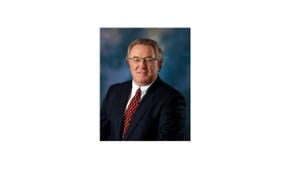
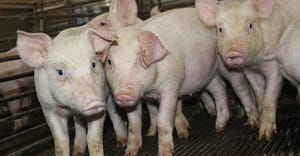
Some people are simply destined to work with pigs. Don Levis is one of those people.
Born and raised in south-central Iowa, Levis and his twin brother accounted for two-thirds of the class in a one-room schoolhouse where his formal education began. Much of his youth was spent on the family's 420-acre, diversified farm near Allerton, IA, which included dairy, beef, turkeys, sheep and 30 sows, farrow-to-finish.
Family pictures show the Levis twins sitting on the ground surrounded by little pigs. For a 4-H demonstration project, Levis constructed a farrowing crate model made from wooden sticks. “I wish I had saved it,” he says earnestly.
Levis' father built the first modified, open-front feeding floor in Wayne County. “I remember pouring the concrete and building our own wooden self-feeders,” says the recently appointed University of Nebraska swine Extension specialist at Concord.
Entering his late teens, each step drew him closer to a career in the pork industry.
He attended Northeast Missouri State University with hopes of returning to the farm. But Uncle Sam had other ideas and he was drafted into the army. Not excited about a tour of duty in Vietnam, Levis quickly enlisted in the Air Force and within days started a 3½-year stint. When he was discharged, they asked if he wanted the GI bill. “I said sure. Then they asked what degree I wanted. Although I didn't really know what it was, I checked PhD,” he recalls.
Levis returned to Northeast Missouri State and finished the year remaining on his BS degree. His father didn't favor a college graduate returning to the farm, however.
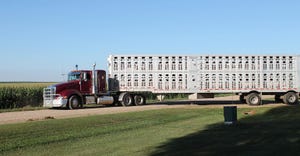
So, Levis took a job driving an 18-wheeler, hauling cattle, sheep and hogs throughout the summer. At 2 a.m. one morning, he swung the big rig into a sales barn in Maryville, MO. No sooner had he set the air brakes when the passenger side door of the Kenworth swung open, and in climbed his twin brother. “Been waitin' for you,” he said. “We had a family meeting and we don't think you need to be driving a truck. I talked to Dr. (Donald) Shelby over at the animal science department (Northwest Missouri State University) and he said he'd take you as a graduate student. Here are the papers.”
Levis said he'd think about it. Freshly loaded and miles down the road, he pulled over to rest and pondered the graduate student opportunity. “There's got to be a better way of living than this,” he remembers thinking.
Soon he was working with production records from hog farms, under the guidance of Dr. Shelby. “He got me excited about reproductive physiology and the science behind it,” Levis proclaims.
With a new master's degree in hand, Shelby encouraged Levis to go on to get a PhD. “I didn't know if I was smart enough, but Dr. Shelby said, ‘you won't get all A's, but you can get through it.’”
With that encouragement, Levis planned to shift his focus to beef cow reproductive physiology at South Dakota State University. Again, fate stepped in. Shortly before arriving, his intended professor/advisor announced he'd taken his dream job as an Oklahoma State Extension beef specialist. Levis was reassigned to a sheep physiologist — not exactly what he had in mind — so he approached George Libal and Richard Walstrom about openings on the swine side and was assigned to work with heterospermic insemination in pigs.
“I decided I liked working with pigs,” he says. Awarded a PhD in 1976, Levis was relatively certain he didn't want to be a lab scientist, so his new goal was an Extension position working with pork producers.
His timing couldn't have been better as he landed a North Carolina State University area swine specialist position stationed in Sampson County, NC, where immense growth in pork production was occurring. His good fortune held as his training included shadowing Charles Stanislaw, “who knew everything from the kind of fly bait that worked best to how to properly ventilate a hog building,” Levis states. “He was probably my main mentor on the pork industry and how to work in it.”
Responsible for 19 counties, Levis set a goal of visiting each county at least once a month. “Often, I would visit 4-5 farms a day. Back then, we weren't really concerned about diseases.”
About 2½ years later, a general livestock specialist position opened up at the University of Nebraska, located at USDA Meat Animal Research Center (MARC) in Clay Center, NE. Again, the move corresponded with growth in the pork industry. “Even in Nebraska it started to grow, so I spent nearly all of my time working with swine,” he reflects. Eventually, it became a full-time swine position — 75% extension, 25% research.
Of his research at MARC, he says, “That was probably the best thing I could do, because I got to work with sexual behavior in sows and boars. I got to apply my research work to the farm — and that gave me more credibility.”
The true value began to take shape as he developed the Levis Swine Breeding System, a design concept for housing boars and sows in separate rooms. The system required the sows to be brought to meet the boars in a breeding pen where fresh exposure improved estrous detection. The design was easily adapted as artificial insemination gained acceptance in swine.
“Another thing I liked about the system was when we brought the sows to the boar, they would ‘lock up,’ so we could train employees on how a sow acts and what she looks like when she's in good standing heat,” Levis says.
The Levis System has been adopted throughout the United States and around the world.
Levis lists the implementation of confinement, the adoption of artificial insemination and the emphasis on biosecurity as some of the biggest changes he's seen in his 30-plus years of Extension work.
He began working with artificial insemination in 1972. “I couldn't get anybody interested,” he says. “The reason it didn't take off right away was that we didn't have the right equipment or procedures developed. Some people had excellent results, while the next guy had a total disaster. Everyone remembered the total disasters. Once we fine-tuned everything, it really took off.”
Levis lists four: animal welfare, ethanol's impact on feed prices, the environment — particularly air quality, — and the industry workforce.
“In the long term, I don't think we'll be able to keep gestation stalls,” he says. “It's a feeling issue, not a scientific issue.”
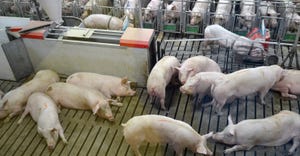
Levis thinks the industry should try to retain the use of stalls for the first 30-40 days after weaning — for the welfare of the sow and to insure they are safely pregnant.
“The biological reason is the sow has to receive the pregnancy signal at Day 10, 11 or 12. The embryos come down and make a fragile, sticky attachment (to the uterine wall) and send the estrogen signal. We don't want to disturb that because it is a delicate situation. The embryos can't implant, totally, until about Day 28,” he adds.
The hardcore welfarists say they are only interested in the welfare of the sow. “In my mind, the welfare of the sow is she needs to be pregnant,” Levis says. “That's her function in life and we need to do everything we can, welfare-wise, to reestablish her pregnancy.
“If it comes down to keeping them out of stalls from the time they are weaned until they farrow again, I think it will create problems. Farrowing rate will probably drop 5-10% and litter sizes will go down by ½ pig, maybe more.”
Fighting sows is inevitable. “You can't tell these sows they've got to quit fighting. They're going to establish that hierarchy,” he says. “The critical question is, how big should the groups be?”
Levis also sees maintaining an effective workforce as a major challenge to the industry. “Employees want to be part of the whole business; they are not assembly-line workers,” he asserts.
He offers this novel incentive program for keeping employees interested — personally and financially. “Assign 10 sows to each worker on Jan. 1, but don't tell them which sows are theirs. At the end of the year, each worker will get the net income from those 10 sows.
“The workers in the breeding barn will do the best they can, because each sow could be one of their sows. In gestation, the workers will take better care of each sow for the same reason. Likewise, in farrowing. They will take good care of the sows and litters because they want to get as many pigs as possible, because any sow could be one of theirs.
“Besides the financial rewards, it makes them feel like they are part of the operation,” he reasons. Levis thinks it's worth a try, assuming there are no legal or liability issues to confound the plan.
Whether he picked pigs, or pigs picked him, Levis is genuinely grateful for his career in Extension. “I always enjoy going to the farm and actually helping solve a problem. When I retire, I won't need a big celebration to have people tell me I've done a good job, because pork producers express their appreciation to me for helping solve their problems nearly every day,” he says.
Reflecting on the best advice he's gotten in his career, Levis remembers his major professor, Donald Shelby, gave him the soundest advice of all shortly before he defended his master's thesis: “Engage your brain before your mouth.”
And he remembers a thoughtful discussion with the late Lauren Christian at a meeting in Iowa. Concerned that his administrators thought he should spend his time in Nebraska, Christian offered: “Do what's best for the pork industry.”
“But when I tie it all together and ask myself who influenced me the most, I keep coming back to the pork producers, because they're the ones who have been driving me,” he adds.
— Dale Miller, Editor
Continue to next Master: Temple Grandin >
Jump to:
Bob Dykhuis | Jill Appell | Bob Baarsch | Roy Schultz, DVM | Chris Hurt | Don Levis | Temple Grandin | Alan Sutton | Gary Cromwell | Allen E. Christian
Want to use this article? Click here for options!
© 2009 Penton Media Inc.