The Masters
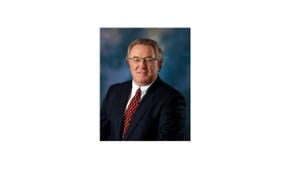
Often, when Bob Baarsch drives the nearly 20 miles from his home in Spring Valley, MN, to his office in the tiny town of LeRoy, perched on the Minnesota-Iowa border, he feels like he's the only pork producer left in the county. Sometimes, it makes him sad.
His spacious, recently renovated office contains the usual business-related necessities, pictures of his family and Alaska vacations,, and a book passed down from his father, Dale Baarsch.
The book Success with Hogs, written by Charles Dawson and published in 1920, contains these words in the first paragraph of the introductory chapter: “Real hog men are not necessarily born nor bred, but are generally injected into the business through causes of necessity, and are schooled and graduated by years of costly experience.”
Baarsch identifies with the reference to “necessity” because it pretty accurately reflects his business approach to the hog business. Necessity serves as the driving force that has motivated him to apply the latest technologies to the production and marketing methods at Next Generation Pork, now producing 120,000 hogs and managing another 100,000, annually.
In the early ‘60s, Baarsch dabbled in the hog business with his father and older brother, Tom, who bought a bred Chester White sow from a neighbor. The litter of 10 served as the foundation of the fledgling sow herd.
In 1962, Doc Jorgenson, whose family had immigrated from Denmark, saw the Baarsches farrowing under a shade tree and declared: “You've got to get a farrowing barn.” He helped import the Danish equipment needed.
At the time, there were no crated farrowing barns in the area. “It was pretty leading edge,” Baarsch explains.
The move caught the attention of the local Purina dealer, who sent the Baarsches on a tour of the company's research farm near St. Louis, MO, to see more state-of-the-art production methods.
Then, in 1965, the Purina dealer convinced the elder Baarsch to put up a slotted-floor finishing barn. “I'll carry you in feed for as long as it takes,” he reassured.
Next, the Baarsch herd was one of the first to be stocked with Kleen Lean genetics. “They provided us with good genetics and taught us good husbandry skills and recordkeeping management,” Bob Baarsch remembers. “Those were really watershed moments.”
By 1972, the swine enterprise had grown to 100 sows, farrow-to-finish. A study of their farm accounting records showed the row crops making about a buck an acre, while the hog profits column was considerably better. So in 1973, the farm machinery was sold, the cropland rented, and the size of the sow herd doubled.
A year later, when he graduated from high school, Baarsch considered joining his parents' hog production enterprise, but chose instead to pursue an agribusiness degree at the University of Minnesota.
His college graduation corresponded with his father's decision to sell the farm, which appeared to be a last chance to buy the 200-sow herd and 200 acres of land. Baarsch passed, thinking the $470,000 price tag was a bit high.
Instead, he took a job with Merrill-Lynch in commodity futures and later worked in the cattle industry in Montana. Within two years, he returned to the Midwest to work in the specialty products division for DoBoy Feeds, based in Sioux Falls, SD.
In the midst of the farm crisis, a foreclosure put the hog farm back in his father's hands in 1984.
“The farm was a mess,” Baarsch remembers. “You can do a lot of damage to a hog farm in 4-5 years. Dad's health wasn't very good, so he was in a bit of a fix.”
Continue reading about Bob Baarsch >
Jump to:
Bob Dykhuis | Jill Appell | Bob Baarsch | Roy Schultz, DVM | Chris Hurt | Don Levis | Temple Grandin | Alan Sutton | Gary Cromwell | Allen E. Christian
Want to use this article? Click here for options!
© 2009 Penton Media Inc.