NHF Digital Edition

Get our FREE digital edition! Subscribe here.

The Masters

The Masters of the Pork Industry are a very special, handpicked group of pork industry visionaries.

Herein, you will find the personal stories and business philosophies of this dynamic group.

Each openly shares the trials and inspirations that have carried them forward in their pursuit of excellence.

Their dedication and insight about the challenges facing the pork industry are invaluable.

Jump to:
Bob Dykhuis | Jill Appell | Bob Baarsch | Roy Schultz, DVM | Chris Hurt | Don Levis | Temple Grandin | Alan Sutton | Gary Cromwell | Allen E. Christian


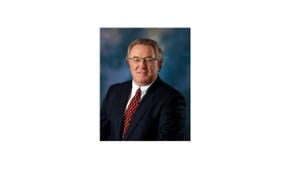
Bob Dykhuis

Industry involvement provides big payback.

Bob Dykhuis is excited about the pork industry's future. Never mind about ethanol, the price of corn, sow gestation stalls and PRRS (porcine reproductive and respiratory syndrome). These are all manageable challenges, says the Holland, MI, pork producer.

In a sense, some of these challenges are an opportunity for the industry, he says. They're sure to make it better. Stronger.

“There are some exciting people coming back into this industry who are really educated and professional; people who have a family history behind them,” he reinforces. “I think that's exciting. We've got to get them integrated and involved.”

Dykhuis Farms' sow herd is currently pushing 19,000 sows, with a goal of 20,000.

“With our size, the people we are recruiting and hiring are specialists; key people to do certain things,” he explains. Included in that recruitment is his oldest daughter, Erin, a graduate of Iowa State University, who serves as Dykhuis Farms' reproductive supervisor; and son, Joe, an agricultural economics major at Purdue University, who's returned as the firm's economist and manager of special projects. Bob and Lorrie's three youngest daughters — Rachel, Cara and Jenna — are at various stages of college and high school education. All have worked in the hog operation.

Recent hires also include a crop specialist in charge of waste management, and a nutritionist with a master's degree who will oversee wean-to-finish operations.

“A few years ago, I was between my youthful, risk-taking enthusiasm and seeing my children's commitment to agriculture,” Dykhuis admits. “We were dealing with PRRS and lower prices. But then we started to reengage and build this bigger system. We went from 5,000 sows to 8,000, then to 12,000, then to 15,000, and now we're aiming at 20,000 in just five years. My kids are coming back into the operation. We are hiring a different level of professional to take care of the different challenges. We're redoing our computer software and our tracking capabilities, so we're measuring things more intensely, scientifically. We're trying to figure out how things happen, why they happen — before they happen.

“To me, in a sense, the thing that fuels most of that is higher feed prices. Higher feed prices reward better management. We needed to improve our management anyway, but recent feed prices fueled it. Just as high corn prices intensify how you raise corn, higher feed prices refocus us on better management in pig production. It offers an almost renewed excitement and intensity, which as an industry is where we want to go anyway.”

No Stranger to Change

In 1978, Dykhuis graduated from a two-year agricultural technology program at Michigan State University and joined his father in a grain bin construction business, which supported a part-time farming operation both hoped could someday be a full-time endeavor.

By the end of 1980, their plans began to take shape. On Dec. 23, they took delivery of their first PIC gilts for a 200-sow, farrow-to-feeder pig operation. “We got into the industry at a time when I had enough education to understand that there were scientific ways to do things, yet early enough that the explosion wasn't too big to ride the wave,” he remembers.

In 1985, a decision had to be made — expand the partnership or choose a new course. Dykhuis sold his portion of the operation to his father and he and his wife, Lorrie, built a new, 270-sow operation. By 1987, he developed an internal gilt multiplication plan using PIC stock. By the late '80s, Dykhuis realized the feeder pig business was floundering, so he converted to farrow-to-finish production.

Continue reading about Bob Dykhuis >

Want to use this article? Click here for options!
© 2009 Penton Media Inc.


Most Recent Story


Most Recent Articles


National Hog Farmer TV

Resources

  • Industry Resources
  • Calendar
  • Blueprint Issues
  • Career Opportunities
  • Pork Checkoff
  • Quarterly/Weekly Hog and Pig Reports
  • Product Info
  • People
  • Production Posters
  • Green Agriculture
  • State of the Pork Industry Report
  • New Product Tour

Current Issue

New Rules for Risk Management

Risk management, it seems, has always been viewed favorably by pork producers. Problem is, it's rarely practiced to any great degree. ...

Current Issue

"Swine Flu" - It's Time to Move On

Something bad has happened to you. It wasn't deserved and it wasn't fair. The people who did it are callous and heartless (at least in regard to you), and lazy, or they would not have done it. But they did it. It's over. It's done. You can whine and wallow in self-pity and martyrdom or pick yourself up, dust yourself off and get on with life and the business of raising quality pork. ...

Marketplace Ads

  • VAL-CO

    Swine Heat Stress. Start thinking about your summer cooling options.

  • Advertise in our Marketplace

    Advertise your business here! Find out how.

  • U.S. Crop and Livestock Maps for sale

    Ag Maps for Sale: U.S. Crop and Livestock Maps

Back Issues Archive