
Subscribe to Our Newsletters
National Hog Farmer is the source for hog production, management and market news
To better understand the porcine reproductive and respiratory syndrome (PRRS) virus and develop solutions to reduce disease losses for producers, the National Pork Board Swine Health Committee committed checkoff funds in the form of the PRRS Initiative Research. So far, the PRRS Initiative Research has funded 123 projects totaling more than $10 million. The Pork Checkoff has just published a 38-page report, “PRRS Initiative Research, 2004-2011,” that contains key findings and applications for PRRS based on the research funded during this period.
The Pork Checkoff has just published a 38-page report, “PRRS Initiative Research, 2004-2011,” that contains key findings and applications for porcine reproductive and respiratory syndrome (PRRS) based on the research funded during this period.
To better understand the PRRS virus and develop solutions to reduce disease losses for producers, the National Pork Board Swine Health Committee in 2004 committed checkoff funds in the form of the PRRS Initiative Research. So far, the PRRS Initiative Research has funded 123 projects totaling more than $10 million. The checkoff funds allocated for PRRS research have helped support scientists at more than 25 universities, U.S. Department of Agriculture laboratories and private research facilities in the United States and abroad.
To leverage funds, the research program has worked in cooperation with the USDA PRRS Coordinated Agricultural Project (PRRS CAP). Project status can be found at www.prrs.org.
The PRRS compendium can be accessed at www.pork.org or call (800) 456-7675. Related PRRS research information is available at www.aasv.org and http://cris.nifa.usda.gov and in Virus Research at http://www.sciencedirect.com/science/journal/01681702/154/1-2.
The report is divided into five sections: Immunology and Vaccine Development; Epidemiology, Risk Factors and Control Strategies; Diagnostic Tests and PRRS Surveillance; Regional Elimination; and Genetic Resistance to Disease.
In the immunology section, researchers expected to find that PRRS virus behaves in pigs like related viruses behave in their own host species, and that the pig immune response to PRRS virus is fundamentally the same as a mouse or human immune response to viral infection. But researchers found that PRRS virus does not behave like many other viral diseases of the pig.
Other research in the immunology section evaluated the immune response of the PRRS virus with co-infections of swine influenza virus and porcine circovirus type 2, identified why cells become permissive to the PRRS virus and how infection occurs, and continued to learn how the virus evades the immune system to cause persistent infection.
Those findings allowed researchers to pursue strategies to create alternate approaches for vaccine development, develop appropriate herd closure strategies and improve herd health management in herds with multiple health challenges.
Research projects on vaccine development identified key virus structural proteins for further research, identified different vaccine components for better immune system stimulation and evaluated different cell lines to grow the virus effectively for vaccine development. These efforts have produced development of different approaches for PRRS vaccine and development of a marker vaccine to identify vaccine virus vs. field virus.
The epidemiology research section covered effective management strategies for PRRS and understanding transmission of the PRRS virus. Research looked at different strategies for control and elimination and developed a formal mechanism to identify key risks for PRRS infection using the Production Animal Disease Risk Assessment Program (PADRAP).
This research on the epidemiology of the virus has produced increased use of biosecurity measures as a control for PRRS, the use of filtration for preventing PRRS infection and the validation of herd closure strategies.
PRRS diagnostics and surveillance research has afforded increased knowledge of PRRS virus structure and improved diagnostic testing capabilities. New and emerging strains of the PRRS virus are detected. Validated, alternative samples for diagnostic tests provide another accurate way to collect samples.
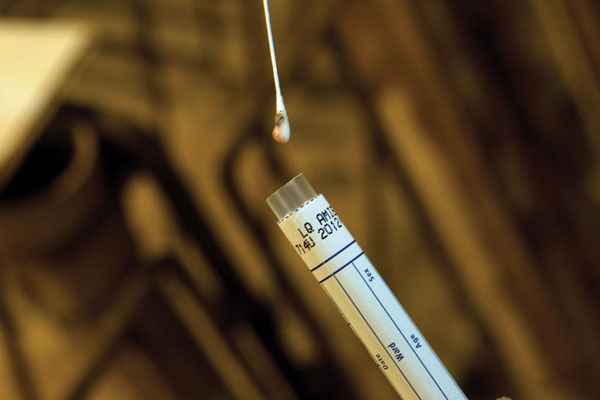
Results of this work include enhanced testing capabilities and simpler methods of PRRS sample collection using oral fluids (cotton rope) and blood swabs.
Research on regional elimination of PRRS is being carried out in projects across the United States. The complete list of all of the PRRS regional elimination research can be viewed at www.pork.org/research.
PADRAP is being used as a standard for any regional elimination project and has helped develop a standardized geographical mapping program for herd status.
As part of these PRRS research efforts, a major economic evaluation of PRRS elimination was completed and published in 2005. It estimated the annual cost of PRRS at $560 million based mainly on losses to the breeding herd. A second effort, published in 2011, calculated losses to both the breeding herd and growing pigs, encompassed related costs, and evaluated various PRRS cleanup protocols that are discussed elsewhere in this issue. Total annual losses were estimated at nearly $1 billion.
The final PRRS research initiative involved genetic resistance to disease. Research has identified genetic components involved in how well pigs respond to PRRS infection and genetic markers that affirm producers can co-select for a lower PRRS viral load and improved weight gain. Researchers better understand how additional phenotypes affect PRRS-infected pigs and PRRS viral diversity.
This knowledge on genetic resistance is producing advancements in genotypes and phenotypes that can predict susceptibility and/or resistance to PRRS virus utilizing broad collaboration of resources across the pig industry.
You May Also Like
Enter a zip code to see the weather conditions for a different location.