North American Preview

National Hog Farmer Newsletter
Provides pork producers in the United States and Canada with weekly analysis of items that will impact their business. Subscribe

Seeking Answers for Postweaning Diarrhea

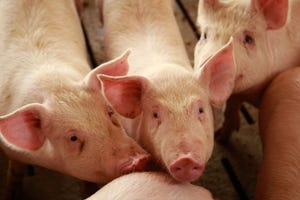
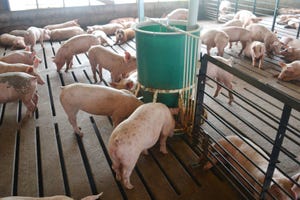
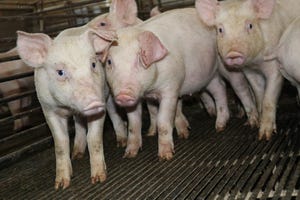
Porcine postweaning diarrhea (PWD), caused by enterotoxigenic Escherichia coli (ETEC), is one of the most economically significant swine diseases. It causes an estimated $90 million in annual losses due to death of up to 5% of young pigs.

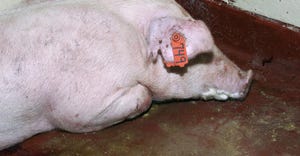
Symptoms of PWD include severe diarrhea, dehydration, slow growth and weight loss.

Despite its importance, there are no commercially available vaccines or treatment options to protect weaned pigs from PWD.

Key virulence factors for PWD are believed to be bacterial fimbriae and enterotoxins produced by ETEC strains. Bacterial fimbriae attach E. coli strains to the small intestine and cause bacterial colonization. Then the colonized E. coli strains secrete enterotoxins, which cause an overproduction of fluid secretions and result in diarrhea.

However, recent studies at South Dakota State University's Center for Infectious Disease Research & Vaccinology indicate that factors causing PWD could be more complicated, and that other virulence factors could be contributing to the disease, making the development of treatment options even more difficult.

K88 and F18 fimbrial strains of E. coli are the dominant pathogens found in pigs with PWD. These E. coli strains produce one or more enterotoxins.

A study of 304 E. coli strains isolated from pigs with PWD suggests that other E. coli toxins and non-fimbrial adhesions could contribute to PWD.

The study found that fimbrial E. coli strains isolated from pigs with PWD express mainly K88 (64.6%) and F18 (34.3%), but also heat-labile (57.7%) and a variety of heat-stable toxins, all of which remain the dominant fimbriae and enterotoxins associated with PWD.

But it is noticeable that enteroaggregative E. coli toxin is commonly associated with PWD, and that the porcine attaching and effacing-associated factor is showing high prevalence in PWD.

To understand the virulence factors for PWD, a study model was developed using genetically engineered E. coli strains with one fimbria and one enterotoxin. Animal challenge studies were conducted using gnotobiotic (germ free) pigs.

It was found that a K88 E. coli strain and a heat-labile toxin cause severe diarrhea in all pigs, and a strain producing K88 fimbria and heat-stable toxin (STb) causes disease in 60-70% of pigs. Other enterotoxins are being investigated for virulence.

An ongoing research project for vaccine development funded by USDA shows promise. So far the vaccine protects pigs from K88 fimbrial ETEC strains. Work continues to add vaccine protection against heat-stable toxins, and acquisition of funds to complete this research project.

Researcher: Weiping Zhang, South Dakota State University. Contact Zhang by phone (605) 688-4317, fax (605) 688-6003 or e-mail weiping.zhang@sdstate.edu.

Want to use this article? Click here for options!
© 2008 Penton Media Inc.

Most Recent Story


National Hog Farmer TV

Resources

  • Industry Resources
  • Calendar
  • Blueprint Issues
  • Career Opportunities
  • Pork Checkoff
  • Quarterly/Weekly Hog and Pig Reports
  • Product Info
  • People
  • Gilt Selection Posters
  • Green Agriculture
  • State of the Pork Industry Report

Recent News

Special Report from the 39th Swine Veterinarians Meeting

The American Association of Swine Veterinarians (AASV) held its 39th annual meeting in San Diego, CA, in early March. Following are some of the activities which took place...

Processing Downers Could Bring Fine, Plant Shutdown

Three senators have co-sponsored legislation that would fine and close livestock slaughter plants that repeatedly process downed animals...

Marketplace Ads

  • VAL-CO

    Swine Heat Stress. Start thinking about your summer cooling options.

  • Advertise in our Marketplace

    Advertise your business here! Find out how.

  • U.S. Crop and Livestock Maps for sale

    Ag Maps for Sale: U.S. Crop and Livestock Maps

Back Issues Archive