Risk Assessment Tool Helps Fight PRRS
As momentum builds for regional and national elimination of the porcine reproductive and respiratory syndrome (PRRS) virus, biosecurity and risk assessment gain urgency.
It has been almost three decades since the PPRS virus was first recognized as the infectious agent responsible for reproductive failure in sows and severe pneumonia in piglets.
During that time, the virus has proven to be a formidable nemesis. Progress in controlling the virus and the disease it causes has been frustratingly slow for producers, veterinarians and researchers. The disease remains the most costly disease facing the U.S. pork industry and a drain on its global competitiveness.
The American Association of Swine Veterinarians' (AASV) PRRS Risk Assessment for the Breeding Herd can help veterinarians tackle two questions that are fundamental to reducing the impact of the PRRS virus:
First, how do we reduce the frequency of outbreaks in PRRS-positive herds?
Second, how do we keep PRRS-negative herds negative?
Success in dealing with PRRS will essentially depend on how well we master these two challenges.
The risk assessment tool offers a standardized way of measuring and benchmarking biosecurity practices and estimated disease risks associated with alternative practices.
The pork industry is an increasingly high-risk industry. The PRRS virus is a significant source of that risk.
If U.S. pork producers want to be globally competitive, low-cost producers, they need to focus on getting better at biosecurity now and eventually eliminating this virus from the United States.
Reducing the frequency of outbreaks in PRRS-positive herds.
While swine previously vaccinated or infected with the PRRS virus are protected from related strains of the virus, they are less protected against unrelated or new strains. Outbreaks in PRRS-positive breeding herds can occur when unrelated strains of the virus are introduced.
In addition, recurring breaks may occur in endemically infected herds even if the introduction of new strains is prevented.
That's because not all animals become infected with the virus at the same time, which creates subpopulations of animals that may be in various stages of infection and immunity. And, multiple strains of the virus may coexist in the herd, setting the stage for periodic outbreaks.
John Waddell, DVM, Sutton (NE) Veterinary Clinic, used the PRRS Risk Assessment tool in a large production system to help identify and prioritize biosecurity improvements to reduce the frequency of PRRS outbreaks.
After the initial assessment in Year 1 was completed on all of the breeding herd sites in the production system, biosecurity changes were prioritized and written protocols were updated as follows:
-
Rendering pick-up sites for mortalities were moved to off-site locations.
-
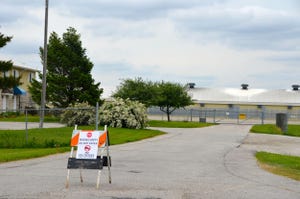
Outside doors were locked at all times and signage was posted to warn visitors they were entering a biosecure area.
-
Keeping PRRS-negative herds negative.
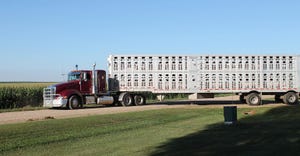
A separate truck wash was built for vehicles hauling pigs to market.
-
Off-site transfer stations were added for weaned pig movements, with dedicated trucks to move pigs from sow farm to transfer station.
-
Dedicated trucks were added for genetic transfers.
-
Showers were added to sites lacking them and instructions for entering facilities were posted.
-
Staff began using needle-free devices for some products and increased frequency of needle changes for products delivered with needle and syringe.
-
Scheduled feed deliveries to sites were adjusted according to their position in the pyramid and their PRRS status.
-
Rules were tightened to increase compliance with procedures restricting the use of semen before PRRS testing results from boar studs are known.
Waddell reassessed the sites annually to monitor the progress of biosecurity improvements (Table 1). He also tracked which sites experienced PRRS outbreaks and how many occurrences transpired over the same time period.
Over the three-year period studied, improvements in biosecurity decreased the average overall risk score for sites in the production system measured with the PRRS Risk Assessment. At the same time, the average number and percentage of herds reporting clinical PRRS outbreaks also declined (Table 1).
Recent innovations for eliminating the virus from swine breeding herds without completely depopulating the herd provide reason for optimism.
The basic approach, referred to as herd closure and rollover, involves eliminating the shedding of virus in the herd so that PRRS-negative gilts may be introduced as previously infected animals are rolled out of the herd using normal culling practices. To stop shedding of the virus, uniform immunity is established in the existing herd and the herd is closed to all introductions of new gilts.
Next Page: The role of risk assessment in regional and national elimination efforts.
Want to use this article? Click here for options!
© 2010 Penton Media Inc.