NHF Digital Edition

Get our FREE digital edition! Subscribe here.

Walk the Pens Advance Pig Handling, Welfare

Proper care at the start eases pig movement at marketing time.

Preparing market hogs for shipment starts at an early age, according to Bill Hollis, DVM, Carthage (IL) Veterinary Service (CVS), Ltd.

Using an educational CD called Walking the Pens, developed by Pfizer Animal Health and CVS Multimedia Department experts Sarah Probst Miller, DVM, and Ken Haas, can help define the steps necessary to successfully load rooms, manage pig growth and deliver more high-value hogs to slaughter.

Hollis summarized several key points of that educational process at the Swine Handling & Transport Forum in Des Moines, IA, in early June, which was co-sponsored by Pfizer Animal Health, Pork Checkoff, National Pork Producers Council, Farm Credit Services of America, NutriDense, Newsham Choice Genetics and National Hog Farmer.

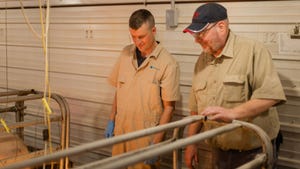
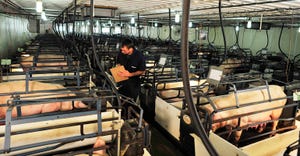
“Pigs move better when they are familiar with the caretaker, particularly with wean-to-finish barns where we don't have to move pigs multiple times. Those pigs are going to work with you a lot better, move with you much more successfully and understand who you are and why you are in the pen,” if walking the pens becomes a routine procedure, he points out.

“We are encouraging barn staffs to use this program because producers are in the barns anyway, so make the time in the barns count,” Hollis encourages.

Loading for Success

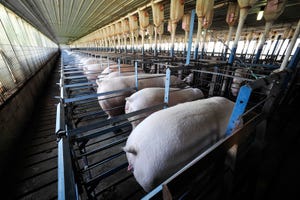
Success actually starts when the barn is set up to provide a safe and properly managed environment for the pigs' arrival.

“The number one thing that I am going to ask my production team: Is the barn ready, cleaned and prepared, and all organic matter removed out of the barn?” Hollis remarks.

Cleaning and disinfecting is often done properly, but the key item most often forgotten is ensuring the barn is dry. “Drying barns is one of the most powerful killers of bacteria and viruses. Make sure that includes the feeders, too,” he emphasizes.

Don't allow disinfectants to pool, as they can cause harm to pigs. Hollis cites Tek-Trol (Agri Laboratories) as an example, as it contains 5% ethylene glycol, a main ingredient in antifreeze, which can cause kidney damage if consumed.

Technicians should always wear protective clothing, boots and eyewear when cleaning and disinfecting a barn.

Getting a correct inventory to drive your group closeouts is another key factor. “Try running larger groups into a few pens and then counting pigs into individual pens as you move pigs through the barn,” Hollis suggests. Handle these pigs with care — they are the pigs that you will be managing for the next six months to market.

“Placing them evenly throughout the pens is important. Euthanize the no-value or reject pigs,” he says. The no-value pigs are not counted as inventory, and they are to be reported back to the sow farm and noted as part of preweaning mortality for the sow farm.

Hollis points out that there has been a movement away from trying to equalize the size of the pigs in the pens. Focus instead on identifying the disadvantaged pigs, making sure they eat some feed and placing them in the sick pen. Leave enough empty pens in your finishing barn to accommodate these disadvantaged pigs.

“We have producers who anticipate health problems and leave several pens empty to serve as hospital pens,” he says.

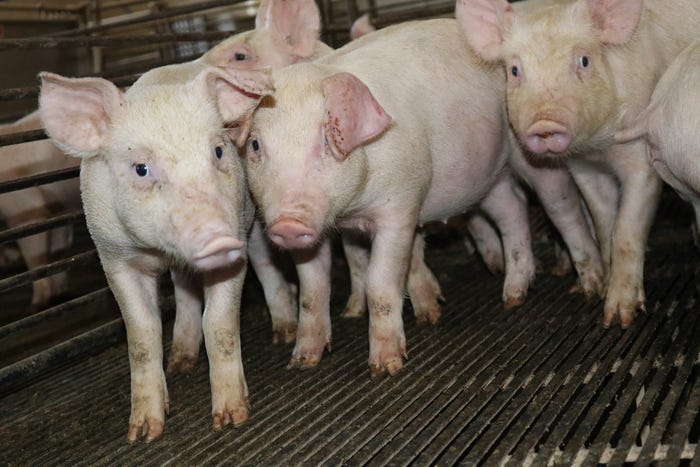
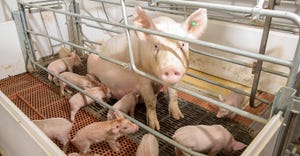
With newly weaned pigs weighing an average of 12-lb., standard deviation on a bell-shaped curve suggests that 2.5% of the pigs in a 1,000-head barn are going to be really small (25 head) and definitely candidates for a reject pen, Hollis estimates.

Water First

In the process of sorting the pigs and setting up the nutritional program, the first thing to check is water. “They are going to drink more than they eat, especially when they arrive,” Hollis states. Water pressure, flow rate and water quality should all be checked out before wean-to-finish pigs are sorted and penned. An easy flow rate indicator is whether you can fill a 20-oz. plastic bottle in 30 seconds. That should equal 15-20 psi, he explains. Set water nipples at shoulder height.

Feed Mats

Feed mats are an integral part of starting pigs; they encourage feed intake and provide a place where there is no updraft from the pit. Mats with edges reduce feed wastage. Locate mats close to the feeder under a heat source to help ease transition to the feeder.

Feeding on mats should last 1-2 weeks in the nursery and 2-3 weeks in wean-to-finish barns. Remove mats when pigs start dunging on them, he adds.

“The problem with mats is sometimes we leave them in too long and there is manure buildup on the mats,” he adds. Leave some space between the feed mat and gating to allow dunging patterns to develop and to prevent manure buildup.

Continue on Page 2: First Week is Critical

Want to use this article? Click here for options!
© 2010 Penton Media Inc.


Most Recent Story


National Hog Farmer TV

Resources

  • Industry Resources
  • Calendar
  • Blueprint Issues
  • Career Opportunities
  • Pork Checkoff
  • Quarterly/Weekly Hog and Pig Reports
  • Product Info
  • People
  • Production Posters
  • Green Agriculture
  • State of the Pork Industry Report
  • New Product Tour

Current Issue

Revisiting the December Pig Crop Report

At what point do we punt the December Hogs and Pigs Report? That is the question that is weighing on the minds of both market analysts and producers as hog slaughter numbers remain far below expected levels and weights show no signs of "backed up" hogs. I realize there are performance issues, so let's discuss the report, what it suggested for this spring, and the forces that could be driving numbers in various directions.

Current Issue

Year-End Meat Inventories Down

Friday's Cold Storage report was not wildly bullish, but was certainly good news regarding the status of frozen meat and poultry inventories. Stocks for every species were well below year-ago levels and lower than the already-low levels reported in the December report. Data for all meat and poultry species appears in Table 1 and the monthly species totals are shown in Figure 1 to provide a historical perspective.

Marketplace Ads

  • VAL-CO

    Swine Heat Stress. Start thinking about your summer cooling options.

  • Advertise in our Marketplace

    Advertise your business here! Find out how.

  • U.S. Crop and Livestock Maps for sale

    Ag Maps for Sale: U.S. Crop and Livestock Maps

Back Issues Archive