Goal: Producing More Quality Pigs
As average litter size continues to rise, extra effort must be focused on saving the best pigs.
Previous Page: Top Production Brings Challenges
Pig Management
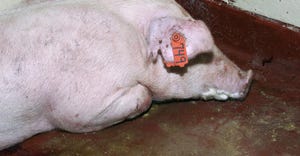
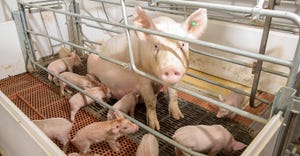
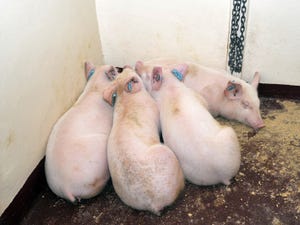
Pay attention to details to spot chilled pigs. “The number-one enemy in the farrowing house is chilling. People automatically think about that pig that is huddled and is obviously chilled. But all newborn pigs are coming out of a 100°F environment into a 70°F environment that is cold for them, and they have to quickly adjust to it before they can get colostrum,” he states.
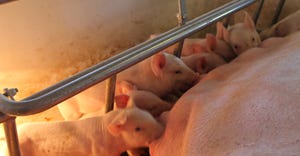
Hot boxes and tubs can greatly assist those struggling newborns. Drying powders play a vital role in reducing the affects of chilling. “I had a farrowing house manager tell me the other day that she likes to put pigs in the hot box right away and lets them stay there until they wake up — so to speak. She gives them time in the boxes to dry off and by the time she takes them out to nurse, they are ready to go — and are not flopping around under the sow and getting laid on,” Gillespie notes.
The Indiana veterinarian used to promote the use of bump weaning/fostering before the advent of milk replacers, etc. Litters were equalized and the use of nurse sows for small pigs was maximized. It was a lot of work but there were a lot of farms doing it, he recalls.
Gillespie observes: “We were weaning very uniform pigs and we met our goal. But we didn't realize the negatives. One day I was on this farm walking through farrowing when I noticed all of the litters that had been bumped. I calculated by Day 10 that over 50% of the litters had been disrupted — and suddenly realized this can't all be good.”
Gillespie says a study patterned after some work in Denmark identified the problems — putting new litters on all those sows reduced sow appetite and their ability to milk.
Bump weaning is still practiced to a limited degree, but he is finding that larger pigs are being weaned without using this management tool.
Another farrowing tip is marking pigs that look like they are starting to fade. These pigs can be closely watched and treated before they become fallbacks.
Milk replacer systems can play a role in helping save pigs. “There are places for these milk systems, or you can build more farrowing crates, extend weaning age, and let the sows do the nursing,” he says.
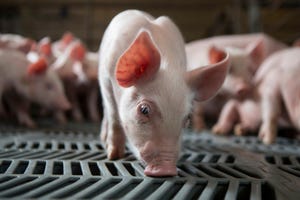
Saving small pigs was the subject of another trial Gillespie conducted. Fifty piglets from one farm were raised normally, using nurse sows to boost performance. The piglets — weighing 1 lb. 13 oz. to 2 lb. 4 oz. — were raised and 76% of them survived. They weighed 9-12 lb. when they were weaned at 20 days of age.
“We answered the first question, and that was whether we could take these pigs and make them into almost average pigs, and we did that,” he says. In a second, similar study, compromised pigs were raised and weaned at 12 lb. vs. 13 lb. for the normal litters.
“Three years or so ago, we wouldn't have even tolerated those little pigs, but we didn't have the amount of those types of pigs that we are seeing now,” Gillespie says.
He clarifies that the pigs that can be saved are of normal appearance, just small in size, similar to human preemies that are born prematurely and turn out to be very normal people.
Additional Factors
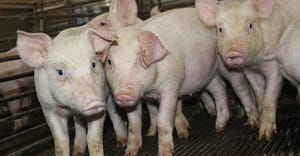
The ability to create more full-value pigs is also due, in part, to the trend to later weaning, which Gillespie believes will end up averaging 23-24 days of age.
By moving to later weaning, those current average 3-lb. or heavier birthweight pigs with a 13- to 14-lb. weaning weight will suddenly become nearly 16 lb., meaning that change could translate into fewer days to market.
The genesis for this article was a presentation by Gillespie at the March annual meeting of the American Association of Swine Veterinarians in Dallas, TX.
| Database of 65,000 sows | ||||||||||
|---|---|---|---|---|---|---|---|---|---|---|
|
| Average female inventory | Farrowing rate | Total born | Pre-weaning mortality | Average pigs weaned/litter | Pigs weaned/sow/year | Weaning to 1st service interval, days | Litters/mated female/year | Sow mortality | Replacement rate |
| Median | 1,144 | 86.1% | 12.5 | 11.1% | 10.0 | 23.7 | 6.5 | 2.46 | 5.9% | 50.6% |
| Best weighted |
| 94.5% | 14.3 | 4.5% | 12.6 | 29.1 | 4.1 | 2.60 | 0.2% | 28.2% |
| Average by average female inventory |
| |||||||||
Want to use this article? Click here for options!
© 2010 Penton Media Inc.