Renewal on Rolling Hills
Livestock bring about a renaissance in lovely Pennsylvania Dutch country.
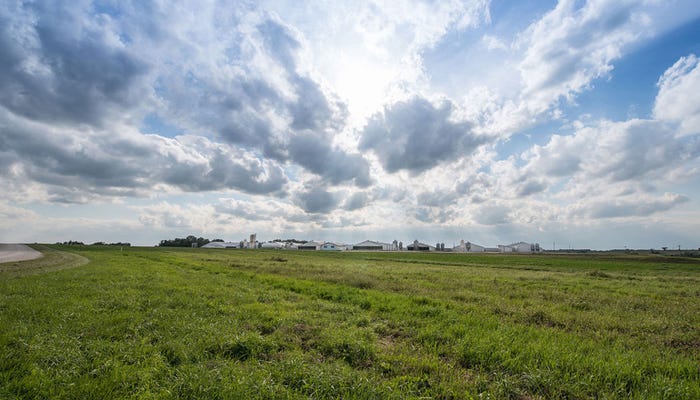
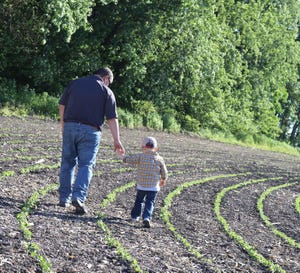
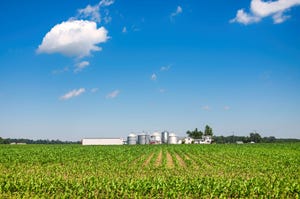
Lancaster County, PA, is known for its small and scenic farms woven like a quilt upon rolling green hills. Lowell and Janet Sensenig operate one of those patches, located in the northeastern part of the county near Mohnton, and it offers one of the most lush and colorful parts of the fabric. But the land wasn't always this way.
“When we first got here in 1977, the place was a mess,” Lowell says. The farm, operated by tenants for more than 25 years before it was purchased by the Sensenig family, had eroded to the point that tractors couldn't even use the field lanes because of the deep gullies that had been cut. “We had to fill ditches and reroute water just to set up the farm so we could operate our equipment,” he adds.
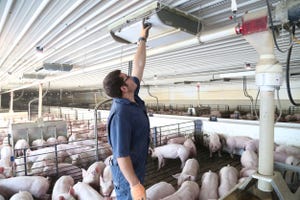
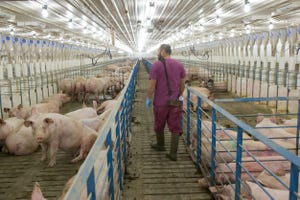
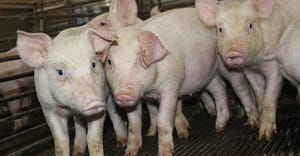
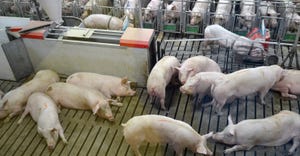
The Sensenigs began to build the farm around livestock, which are economically woven into the fabric of Pennsylvania Dutch country. The Sensenigs operate 40 acres of their own plus 60 acres of rented ground, but don't get the idea that this is a hobby farm. They market about 1,200 antibiotic-free hogs each year from their 400-head contract finishing facility, delivered to Leidy's, a regional packer.
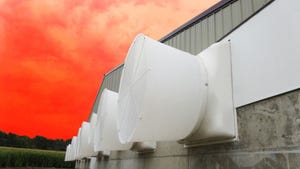
They also send more than a quarter-million broilers to market each year under contract with Tyson Foods, grown in a pair of barns that are wedged diagonally into their farmstead. And there are commonly 70 dairy heifers on the farm, delivered from area dairies when the calves are 6-8 months old. The Sensenigs grow the calves through breeding age, breed the heifers by artificial insemination, then return them to the dairies just ahead of their due date.
“You find that farmers try to get the most out of their land in this county,” Sensenig says. “Land is extremely expensive here, often running $20,000 or more per acre. We have been fortunate to fill some local needs through our livestock production, and make a living doing so.”
Conservation concerns
Soon after they took over the farm, the Sensenigs set out on a plan to save the soil from erosion, protect water quality in the stream running through the farm and build up the soil to help reclaim its productivity. A combination of soil-saving structures and judicious use of nutrients from livestock manure has allowed the farm to flourish.
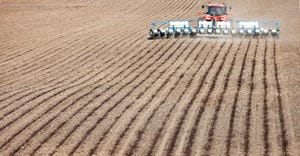
Like the livestock operation, the crop rotation also is intensive. “Our goal is to have something on every acre throughout the year,” Sensenig says. “For example, we no-till rye after corn silage to produce a cover crop. The rye is about ready to green up and really start growing in early spring, so we apply manure from the pit of the finisher on this land in February. The 4,000 gallons of manure applied per acre provide a good balance of nutrients for the rye, which is readily taken up. When we fertilize this way, we can harvest six to seven tons an acre of rye as haylage, which provides feed to the heifers.”
Nutrients from swine manure are applied in the spring ahead of fields that will be planted to corn for silage, as well as applied in the fall to cornfields that have been harvested.
“Manure nutrients supply all our needs for corn and hay ground,” he says. “At today's fertilizer prices, the value of those nutrients is about $60/acre. There is an abundance of manure in Lancaster County, so it is important to keep your crop yields up and use your nutrients on your farm.”
The Sensenigs keep a close eye on phosphorus levels. In 2008, they completed a Comprehensive Nutrient Management Plan based on phosphorus as part of their Environmental Quality Incentive Program (EQIP) contract.
Phytase in their swine diets helped cut phosphorus levels in the swine manure by 50%. “That made the nitrogen worth twice as much to us,” Sensenig says. “It was quite an economic benefit. We run soil tests every two years, so we can monitor field-by-field to make sure we are not getting into the excess category on any particular field.” The state requires strict nutrient management plans, documenting each gallon of livestock manure applied.
Boosting water quality
Despite all the work the family had done to control erosion on the farm, they decided to go a step further in 2006. “I still was not satisfied with the environmental state of our farm,” Sensenig says. “We reviewed the farm with the Lancaster County Conservation District, and they encouraged us to apply through EQIP for a number of practices.”
The contract was granted, and a number of soil and water improvements went into place. A 180-ft.-long windbreak was planted, the heifer barnyard and manure storage areas were put under a roof, and a number of water-control and stream-improvement structures went into place.
More than 2,000 ft. of stream bank fencing was completed in 2008, keeping heifers away from the stream except where crossings have been designed. “Just fencing cattle out of the stream has done wonders for healing up the stream banks,” he adds.
Some old gang slats salvaged from a hog building helped heal up a big erosion problem. Heavy rains would cause runoff from a large hill on the farm. It has now been corralled by a retention basin lined with the 4 × 10-ft. slats and equipped with an underground drainage tile and a 300-ft. grassed waterway.
Next Page: Good neighbors
Want to use this article? Click here for options!
© 2009 Penton Media Inc.