Sensitive Land Managed with Care
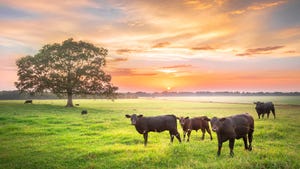
Schafer Farms balances cattle, pigs and pasture on the scenic rolling hills of southeastern Minnesota.
Schafer Farms, Inc. is located only a dozen miles from the Mississippi River, and just a few miles farther from the National Eagle Sanctuary. That's why, in these rolling hills of southeastern Minnesota, it's not that unusual to spot the bird that is recognized as our nation's symbol of freedom.
“In the springtime, we can often see bald eagles sitting in the oak trees just 50 ft. outside our back window,” says Brandon Schafer, who manages the family's hog enterprise. “Not many people get to see that kind of sight, but my kids just find it to be commonplace.”
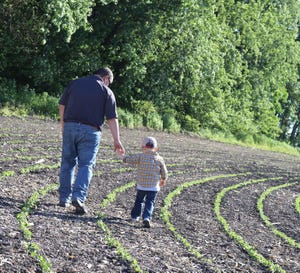
Lowell and Pat Schafer, together with their sons and daughters-in-law, Brandon and Monica and Brian and Heather, are continuing the family farm that was founded here in 1886. Brandon and Monica oversee the swine enterprise and manure management, while Lowell and Pat team up with Brian and Heather to manage the beef operation and crop production.
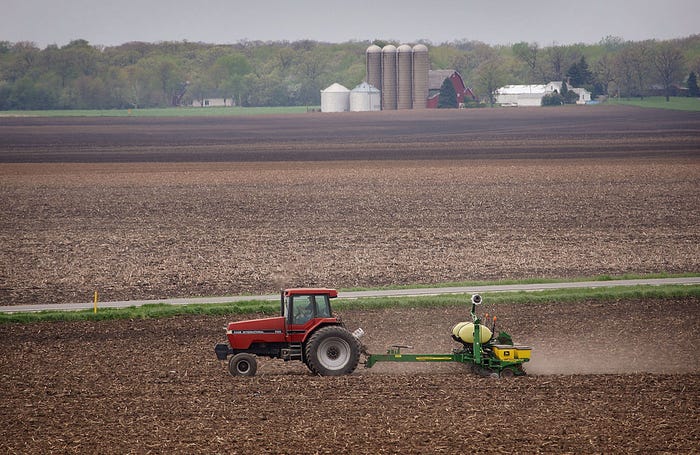
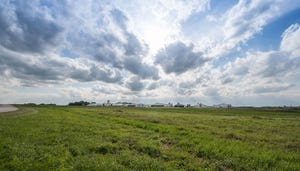
“We appreciate the aesthetic beauty of the rolling hills,” Brandon says. “But obviously, we have a larger degree of sensitive areas that we need to take into consideration. The cow herd has allowed us to manage those acres much differently than if we hooked a tractor and a plow together and went into corn and soybean production. We feel that we're just a little bit better off managing those acres in grasses and permanent vegetation for the cow herd.”
Brian agrees. “The cattle and hog enterprises complement each other well,” he says. “Using hog manure nutrients as fertilizer has allowed us to dramatically increase the stocking rate on our pastures. Whether you are raising corn, soybeans or cattle, your yield per acre makes a lot of difference in your profit margin.”
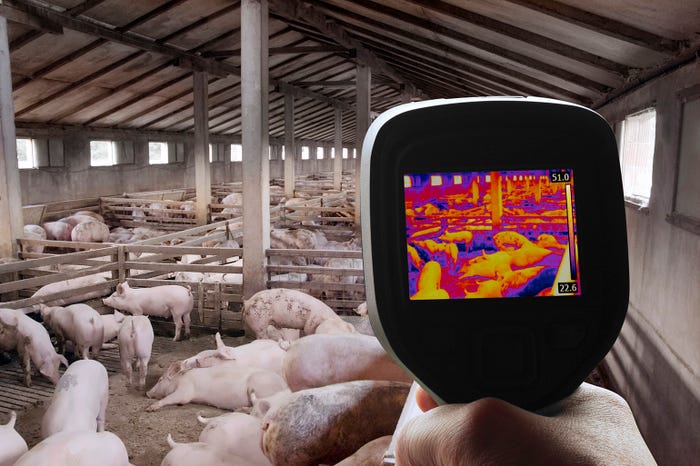
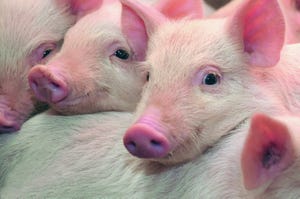
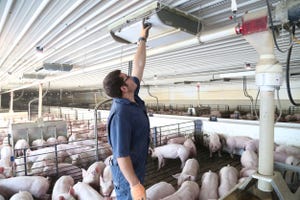
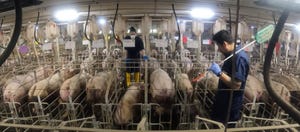
Brandon and Brian represent the sixth generation on this family farm. Brandon returned from college in 1994 to a 240-sow, farrow-to-finish operation, which has now grown to a 1,600-sow, farrow-to-wean operation that produces 38,000 pigs a year. Most of those pigs are marketed on a weaned-pig contract to a pork producer in a neighboring county. The rest of the weaned pigs are retained as replacement gilts on the home site or fed to market weight on finishing sites owned and operated by the Schafers.
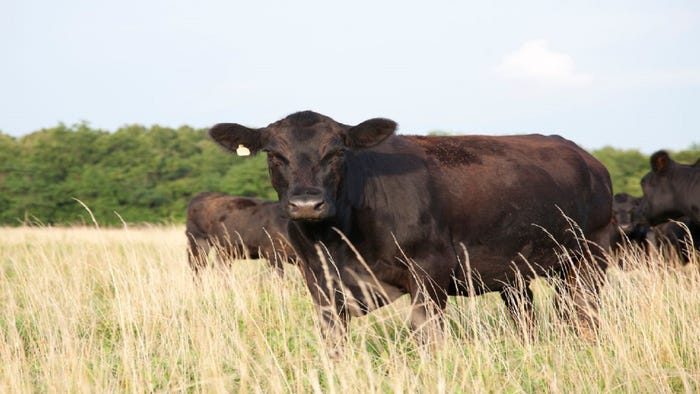
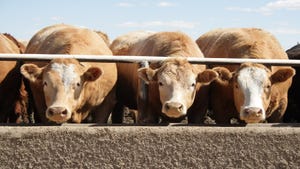
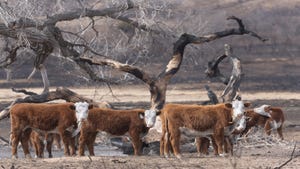
The family also runs a 375-cow Gelbvieh and Balancer beef operation, supplying seedstock throughout the Midwest.
About 200 tillable acres are dedicated to corn silage and alfalfa for the cow herd, while an additional 650 acres of owned and rented timber and pasture land provide seasonal grazing for the cows.
AerWay application
Manure handling consists of deep pits under the gestation and grower barns, and shallow pits with pull plugs below the farrowing unit and hot nurseries that house potential replacement females.
The farrowing unit drains into the gestation barn's deep pit, and the nurseries flush to the grower unit pit. Blending manure from the various production phases in the deep pits helps provide more uniform nutrients when applied, Brandon points out.
The Schafers use a variety of manure application techniques, depending on the terrain and type of crop being fertilized. Dankers Enterprises, a licensed and certified custom applicator, applies the manure using either drag-line hose units with sweep-injection toolbars, a Hydro AerWay toolbar, or tank spreaders.
A favorite technique for manure application on pastureland is the Hydro AerWay toolbar being supplied by drag line. The AerWay features 9-in. knife blades on rotating wheels that pierce slots into the sod, placing manure near the roots of the pasture plants.
“We typically apply to pastures in summer, when they benefit the most from a boost in nutrients and moisture,” Brandon says. “We can nearly double the stocking rates on pastures that receive nutrients from the AerWay.
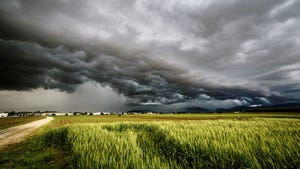
“It's critical that we try and watch the weather patterns to accomplish the least amount of neighbor impact and also maximize the impact of the nutrients that we apply,” he continues. “We try to time the manure application just ahead of a light rain to allow for proper incorporation into the soil, minimizing the odor event to the neighbors. When we're applying with the AerWay toolbar, we are not putting the manure in the ground. We're actually applying that manure on the ground and creating light incisions for that manure to penetrate through. Rain allows that manure to be washed from the surface and down into those incisions.”
Manure management doesn't always go as planned, as the Schafers learned in the fall of 2007. “An emergency response plan is absolutely critical,” Brandon says.
Their emergency response plan proved its value when an umbilical hose blew apart at a coupling. “We were fortunate enough to have the action plan in place to execute, and get the appropriate people on the scene at the proper time,” Brandon says. “Processes were spelled out as to what we needed to do to get that cleaned up. It turned out to be a very good exercise for us.”
Trading nutrients
Over the years, the Schafers have moved a lot of the tillable acres out of row crop production and into pasture, leaving them short of the corn stalks typically used as bedding for the cow herd.
“We now trade a lot of hog manure to neighbors in return for their corn stalks,” Brandon says. “We've got neighbors who allow us to use our equipment to take the corn stalks off, and in turn, we hire a custom applicator to put manure back on those acres at a no-cash exchange. It has worked out well for us.”
Next Page: Environmental values
Want to use this article? Click here for options!
© 2009 Penton Media Inc.