North American Preview

National Hog Farmer Newsletter
Provides pork producers in the United States and Canada with weekly analysis of items that will impact their business. Subscribe

Lessons Learned in Animal Welfare Survey

A joint animal welfare survey conducted by the American Farm Bureau Federation and Oklahoma State University (OSU) produced three key lessons from telephone calls to more than 1,000 individuals across the United States, says F. Bailey Norwood, assistant professor of agricultural economics at OSU.

The first lesson is that the public cares far more about human welfare and farmers than they do farm animals, he says. The financial well-being of U.S. farmers was twice as important as the well-being of farm animals. Human poverty, the U.S. health care system and food safety were found to be more than five times more important than farm animal well-being, he says.

An innovative survey question revealed the suffering of one human was found to be equivalent to the suffering of 11,500 farm animals, and a majority of respondents felt that farmers should be compensated if forced to comply with higher farm animal welfare standards.

Norwood explains these responses do not suggest that farm animal welfare is not important. Rather, it implies that when public policy is being written, the interests of farm animals take a backseat to the interests of humans.

The second lesson is that consumers understand animal welfare is a reflection of their shopping decisions as well as the farmers’ decisions. Most consumers believe their personal food choices have a large impact on the well-being of farm animals, and that if consumers desire higher animal welfare standards, food companies will provide it.

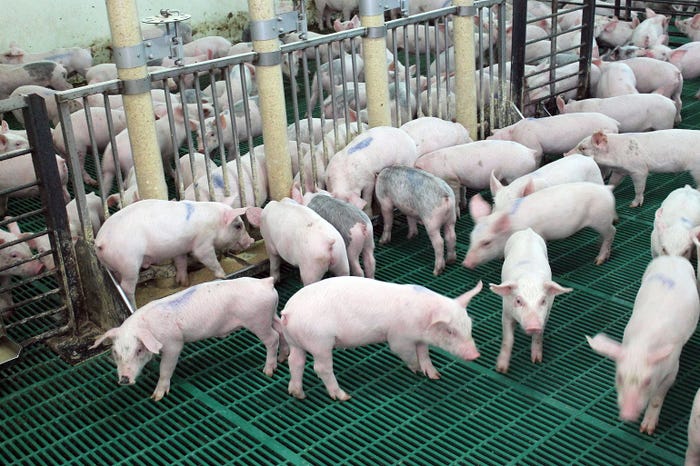
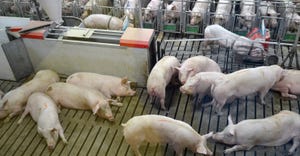
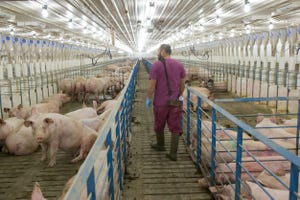
The third lesson is that consumers are much more accepting of the use of gestation stalls for sows if they are given a reason for their use, other than reducing production costs.

For example, only 18% of consumers agreed with the statement, “housing pregnant sows in crates is humane.” However, when the statement was modified to, “housing pregnant sows in crates for their protection from other hogs is humane,” 45% agreed with the statement.

Still, the use of such stalls may always present a public relations problem, notes Norwood. As the survey showed, even when educated on gestation stalls, the majority of consumers still opposed their use.

However, the survey does suggest that efforts by organizations to educate the public are not in vain.

Want to use this article? Click here for options!
© 2008 Penton Media Inc.

Most Recent Story


Latest Jobs


National Hog Farmer TV

Resources

  • Industry Resources
  • Calendar
  • Blueprint Issues
  • Career Opportunities
  • Pork Checkoff
  • Quarterly/Weekly Hog and Pig Reports
  • Product Info
  • People
  • Gilt Selection Posters
  • Green Agriculture
  • State of the Pork Industry Report

Recent News

Producers Face Some Tough Losses Before Profits Return

Extraordinary losses for pork producers in 2008 may be offset by extraordinary profits in the last half of 2009 and 2010...

The Maschhoffs Acquire Iowa Pork Operation

The Maschhoffs have announced that Maschhoff Northwest LLC has purchased the swine production assets of Blackjack Pork LLC of Ames, IA...

Marketplace Ads

  • VAL-CO

    Swine Heat Stress. Start thinking about your summer cooling options.

  • The Pig Barn

    Pigbarn.com, your complete swine information portal.

  • Advertise in our Marketplace

    Advertise your business here! Find out how.

  • U.S. Crop and Livestock Maps for sale

    Ag Maps for Sale: U.S. Crop and Livestock Maps

Back Issues Archive