NHF Digital Edition

Get our FREE digital edition! Subscribe here.

Hog Farm Numbers Continue To Fall

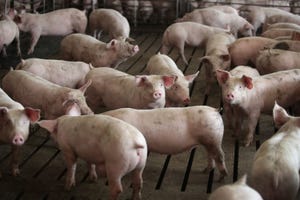
The number of U.S. hog farms declined last year for the 24th consecutive year, according to University of Missouri agricultural economist Ron Plain.

There were 69,420 hog operations in the United States in 2004, based on data from the Agriculture Department’s National Agricultural Statistics Service.

That number is 4,300 fewer than in 2003 and 591,130 fewer than in 1980, the last year in which the number of hog farms increased, says Plain.

The percentage decline in hog farm numbers from 2003 to 2004 at 5.8% was much smaller than the average for the previous decade of 10.2%.

Iowa remains the top hog state both in production and in number of hog farms with 9,200 farms, followed by Minnesota (5,000), Ohio (4,000), Texas (3,900) and Illinois and Pennsylvania, both with 3,400 hog operations.

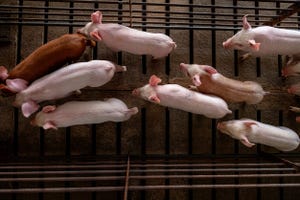
Though the number of hog farms continues to shrink, the number of hogs produced has remained fairly steady, meaning hog farm size keeps growing, explains Plain. In 2004, the average swine herd contained 871 hogs, up 6.3% from the previous year and nine times the average inventory of 1980.

U.S. hog operations with an inventory below 2,000 head represented 89.3% of all hog farms and 21% of the hogs. Those operations with more than 2,000 hogs in inventory made up 10.7% of hog farms, but had 79% of the hogs.

Of the 69,420 U.S. farms that raised hogs last year, only 60,830 owned hogs. The remaining 8,590 farms raised hogs for someone else in contract production. These contract producers raised nearly 40% of all U.S. hogs.

There were 1,150 firms that owned more than 5,000 hogs last year, accounting for 75% of hogs produced. There were 110 operations that owned more than 50,000 hogs at the end of 2004. They owned 54% of the hogs produced in the United States.

This trend toward fewer and larger hog farms is likely to continue unless there are new start-ups, says Plain.

“States that can streamline the permitting-construction process stand a good chance of attracting growth in hog numbers,” he notes.

Want to use this article? Click here for options!
© 2009 Penton Media Inc.


Most Recent Story


Most Recent Articles


National Hog Farmer TV

Resources

  • Industry Resources
  • Calendar
  • Blueprint Issues
  • Career Opportunities
  • Pork Checkoff
  • Quarterly/Weekly Hog and Pig Reports
  • Product Info
  • People
  • Production Posters
  • Green Agriculture
  • State of the Pork Industry Report
  • New Product Tour

Current Issue

Costs, Price Pressures Ease Just a Little

There was a lot to be positive about in the pork industry the last week of October. I realize it is difficult to be optimistic when you are still losing $25 to $30/head. I also realize that positive news at this point could be as dangerous as it is welcome. But facts are facts, and we must recognize them. ...

Current Issue

The "Good" and "Bad" Sides of a Cheaper Dollar

As I begin this week's column, I"m reminded of two different "flip side" statements that may help characterize the topic at hand. The first is the old Archie Campbell schtick - "That's good - no that’s bad," which I have used before. The second reflects President Truman's frustration with economists' incessant use of the qualifier - "on the other hand" - to introduce the contrary opinion on a given topic. President Truman once demanded in his usual colorful language: "Will someone please find me a *!&%$*?>

Marketplace Ads

  • VAL-CO

    Swine Heat Stress. Start thinking about your summer cooling options.

  • Advertise in our Marketplace

    Advertise your business here! Find out how.

  • U.S. Crop and Livestock Maps for sale

    Ag Maps for Sale: U.S. Crop and Livestock Maps

Back Issues Archive